November 16, 2026 | Hair Loss, Hair Restoration
In August, Newsweek ran a story under the headline “A Common Drug Offers New Hope to People With Severe Hair Loss.” The drug is upadacitinib, already prescribed for arthritis and eczema, and the news was a set of trial results in alopecia areata, the autoimmune form of hair loss.
The reporter asked for experts the day before. I sent my answer. It did not run. No complaint; the piece quoted the researchers it needed. But a trial like this looks different from the surgeon’s chair, because I am the one who meets these patients a year later, asking whether they can finally have a transplant. Here is what I told Newsweek, in the words I sent, and then the part I did not have room for: the order I put medicine and surgery in.
What the Drug Does, and Does Not Do
The first thing to get straight is which hair loss we are talking about.
“The trials focus on alopecia areata (AA), an autoimmune condition where the immune system attacks hair follicles in patches or across the whole scalp. AA is distinct from the male or female pattern hair loss that most people associate with hair transplant surgery. In AA the hairloss is patchy or causes thinning throughout. It does not resemble the typical loss in the temples, hairline, and/or crown.”
The numbers were real.
“In the trials, half of the patients on the 30-mg daily dose of upadacitinib reached at least 80 percent scalp coverage at six months, compared with just a handful on placebo. Given how few reliable systemic treatments exist for AA, that is a meaningful result.”
And the mechanism matters, because it tells you what the drug cannot do.
“Upadacitinib is a JAK inhibitor. It works by calming the immune signaling that attacks the follicle. By decreasing the attacks, it lets the hairs grow back normally. It does not grow back hair directly.”
Why a Surgeon Cares
This is the paragraph I most wanted in print.
“From a surgeon’s viewpoint, this study changes everything. Patients with active alopecia areata have poor outcomes from hair transplantation, because the grafted hair gets attacked by the same immune process as native hair. This drug could improve outcomes for hair restoration surgery later, especially for patients left with scarring or partial regrowth once the disease is controlled.”
That is the whole relationship between medicine and surgery in one sentence: a transplant moves healthy hair into a scalp, and the scalp has to be a place where hair can live. I have turned away alopecia areata patients for years for exactly that reason. My own rule, from a hair transplant interview I gave in October:
“I don’t perform hair transplants if there is an active scalp disease, patchy (autoimmune) hair loss, inadequate donor hair, unrealistic expectations or in very young men with active rapid thinning who do not want to medicate to try to slow the rate of hair loss.”
One caution before anyone books a consult on the strength of a headline.
“I want to see data on durability after patients stop the drug before calling this a breakthrough for hair restoration.”
The Order I Put Things In
Most of the people who walk into my office with thinning hair do not have alopecia areata. They have pattern hair loss, and the sequence for them is the one I have been repeating to reporters all year.
Diagnosis comes first, every time.
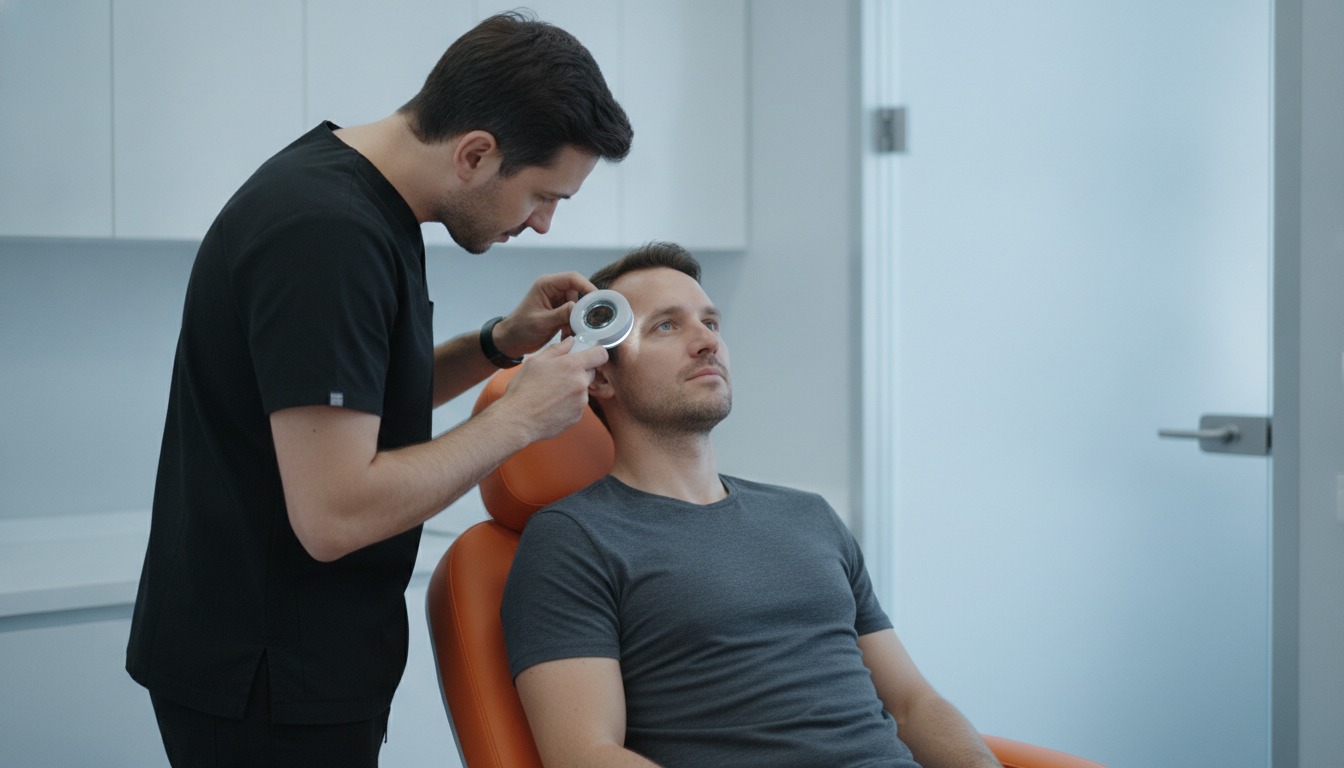
“Before looking at brochures and advertisements from hair transplant clinics, the first step is to get a diagnosis of why the hair is thinning. That means a full evaluation, including looking at the scalp under magnification and taking a thorough family history and medication list, to make sure it is pattern baldness and not some other cause.”
Medicine comes second, and it is not optional.
“Of the existing hair restoration treatments, only minoxidil (Rogaine) and finasteride (Propecia) have extensive empirical support.”
“PRP layered on top of finasteride and minoxidil is a reasonable plan. PRP instead of them is usually money spent to watch loss continue.”
Surgery comes last, and only when the ground is stable.
“I raise surgery when the loss is stable, when the pattern is established rather than actively galloping, and when there is enough donor hair on the back and sides to cover both what is missing now and what will likely be missing in fifteen years.”
| Stage | What it is for | What it cannot do |
|---|---|---|
| Diagnosis | Separates pattern loss from alopecia areata, thyroid, iron, medication and scalp disease | Nothing to treat yet; it decides the treatment |
| Medical therapy (finasteride, minoxidil; a JAK inhibitor for alopecia areata under a prescriber) | Holds native hair, calms an attacking immune system | Does not move hair into bare scalp |
| Regenerative (PRP, exosomes, growth factors) | Thickens hairs that are miniaturized but alive | Does nothing on a shiny, smooth scalp |
| Hair transplant (FUE or FUT) | Rebuilds a hairline or crown with donor hair | Cannot make new hair; fails in active autoimmune loss |
Who Is a Candidate Now
If the drug does for alopecia areata what the trial suggests, I expect a new group of transplant candidates in a few years: people whose disease is controlled and who are left with patches that never filled back in. For them the usual rules will apply. The hairs the transplant uses come from the back and sides, and the plan has to survive fifteen years, not fifteen weeks.
“A transplant moves hair; it does not make new hair. If a man understands that, he will choose his surgeon carefully, protect the hair he still has, and be happy with his result years from now.”
For pattern loss, the candidates have not changed, and neither has my advice about timing.
“Men typically delay seeking treatment for too long. Many have waited two to three years to visit me by the time their receding crown is clearly noticeable in photos and one-third or more of the existing hair on the crown may already have vanished. Medical treatments will help preserve your present hair, while surgical procedures move the hair you cannot currently grow. The individuals who feel most satisfied with their hair transplant results are those who first followed through with medical treatment consistently and started early.”
How I do the surgery itself, the shedding at week two and the growth at month four, is in my FUE hair transplant post and on the hair transplant page. What finasteride does for women is here, and what a repair involves when a transplant was done on the wrong scalp is here. The med spa half, PRP, scalp treatment and oral medication, is on Southwest Plastic Surgery, and my shorter read on the Newsweek piece is on Dr. WorldWide.
Why Choose Dr. Agullo
I am certified by the American Board of Plastic Surgery and the American Board of Surgery, completed my plastic surgery fellowship at the Mayo Clinic, and serve as Clinical Associate Professor of Plastic Surgery at Texas Tech University Health Sciences Center. Castle Connolly has listed me as a Top Doctor every year from 2014 through 2026. Hair restoration, medical and surgical, is part of my practice every week, and I perform the transplant myself.
Ready to Talk?
If your hair is thinning and you want to know which stage you are in, come in and let me look at the scalp under magnification. Call (915) 590-7900, text 1-866-814-0038, or book online at agulloplasticsurgery.com/appointments. #StayBeautiful
Find me at @RealDrWorldWide on Instagram, TikTok, and Snapchat, @Agullo on X, or @AgulloPlasticSurgery on Facebook.