
August 24, 2026 | Facial Rejuvenation, Skin Care Regimen
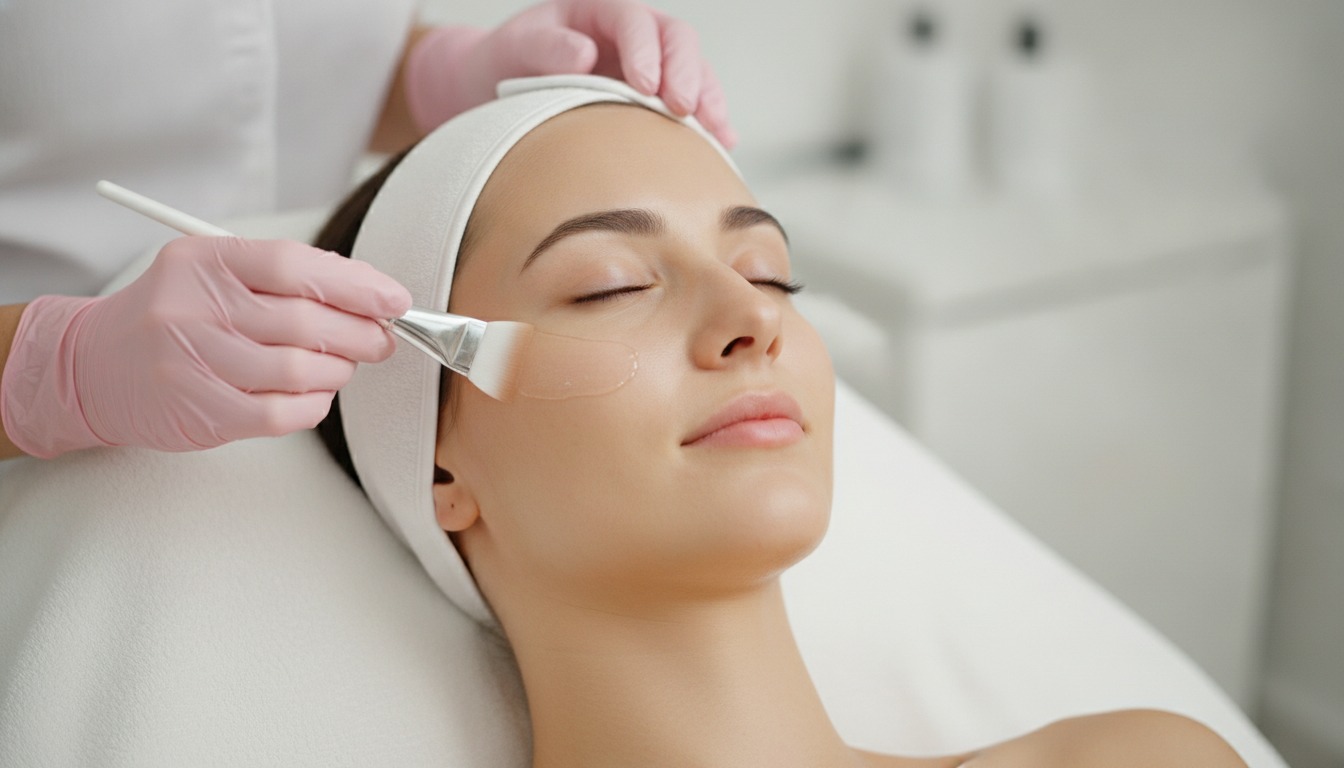
A patient comes in with a screenshot. Someone on TikTok had a peel, looked alarming for four days, emerged glowing. She wants that one.
But “that one” is not a product. It is a depth, and the right depth depends on what her skin is doing, not on what someone else’s skin did.
The Med Spa team at Southwest Plastic Surgery works across five levels of chemical peel.
Dr. Frank Agullo’s overall read on them is positive, with a boundary attached. “I think that peels are great. They do a great job with fine lines and wrinkles and some pigmentation changes, and they do create a refreshment in the face,” he says. “So I think that peels work great to resurface the skin with shorter downtimes.”
Five Depths, and What Each One Treats
Gel peels. The lightest tier, built for people who cannot lose a week. “For clients who want less downtime, maybe with more superficial textural issues, we have our gel peels,” the team explains. “We have a glycolic and lactic acid peel, which is great for photo-damaged skin that needs a little more hydration and light exfoliation. We also have a salicylic and mandelic gel peel, which is good for acne, fungal acne, and any kind of congestion, especially for skin that’s a little more oily.”
Micro peel solutions. “Our next level is the micro peel solutions, a glycolic 20% and a salicylic acid option. Like the gel peels, these go a little deeper and have more downtime. The glycolic is for textural issues, hydration, and more of a glow, but a bit more advanced. The salicylic is better for congestion, oily-prone skin, or blackheads. With these, clients still need to stay out of the sun.”
Advanced corrective peel. “Then we have our advanced corrective peel, which has salicylic acid, lactic acid, and resorcinol, so it’s really good for photo-damaged skin, congestion, inflammation, fine lines, texture, and hormonal acne. It’s kind of an all-in-one, but more advanced with more downtime, at 14% lactic and 14% salicylic.”
Smart TCA. The deepest. “Our Smart TCA system is one of our most aggressive peels. The TCA penetrates deeper into the skin, so it helps with photo aging, fine lines, and wrinkles. It has more downtime, and clients might experience more shedding. That’s our deepest treatment.”
Cost tracks depth. “Our gel peels start at $100, all the way up to around $250 per session for our more aggressive peels.”
| Your Concern | Where You Probably Land |
|---|---|
| Superficial fine lines, pores, post-acne marks | Gel or micro peel |
| Oily skin, blackheads, congestion, hormonal acne | Salicylic or advanced corrective |
| Photo damage plus dullness and dehydration | Glycolic, or advanced corrective |
| Deeper lines, mild laxity, deeper acne scarring | Smart TCA, or something other than a peel |
How the Choice Gets Made
“During a skincare consultation for chemical peels, we assess the skin based on the patient’s main concern, and that’s how we determine which depth to go for,” the team says.
The dividing line is anatomical. “If the patient has superficial fine lines and wrinkles, the appearance of their pores is an issue, or they have post-acne hyperpigmentation, that’s going to need a more superficial peel. If the patient’s concern is deeper fine lines and wrinkles, some skin laxity, or deeper acne scarring, we’d need a deeper chemical peel that reaches all the way down to the dermis in order to get the patient’s wanted result.”
Going deeper than the concern requires buys downtime without buying result. Going shallower buys a pleasant afternoon and no change.
What Recovery Really Looks Like
“Peel day and recovery can look different for every patient,” the team says.
Light peels are undramatic. “Usually with a superficial peel, patients only experience some light flaking and light dryness, which is why keeping the skin hydrated and drinking a lot of water is so important.”
Deep peels are a process, and worth planning around. “With a deeper chemical peel, flaking usually starts around day three to four, and the patient gets more of a shed, think of a snake-like shedding effect. The patient can use clean scissors to trim off the skin as it starts to shed, but again, they really need to focus on hydration, drinking a lot of water, and keeping the skin nice and moisturized.”
Sun protection is where most of the aftercare weight sits. “With both, use sun protection and reapply sunscreen every two hours. Sun exposure is not recommended within the first two weeks after the peel, especially with a deeper one. It can take a week to a week and a half to fully shed, so I’d limit sun exposure for at least two weeks after treatment.”
Makeup is less restricted than people expect. “Makeup is generally safe after a couple of days. If you don’t mind looking a little crazy while you’re shedding, you can apply makeup on top, as long as you’re always wearing your SPF.”
Two weeks is the number patients usually hear for sun avoidance. Dr. Agullo’s number is longer, and he is direct about why.
“After a light to moderate peel, there is strict no sun exposure for the first four weeks, and it continues to be strict for the first three to four months, although there is a slight leeway,” he says. “Now for patients that we’re treating for melasma, really, the avoidance of sun exposure and protection should be a lifetime lifestyle.”
Heat belongs in the same sentence as sun. “We’re very strict afterwards about sun exposure and being religious about using a sunblock, and even avoiding heat and activities like hot yoga, because melasma can come back with heat, not just direct sun exposure.”
The Mistake That Costs People Their Result
Not the peel. The week after it.
“The most common mistake is not listening to your aftercare instructions,” the team says. “Exfoliating too soon can cause barrier damage. Being in the sun without sunscreen, or wearing it but not applying enough or reapplying every two hours, which is super important. Activities that expose the skin to heat can also aggravate it and cause hyperpigmentation. And not having a good skincare routine, or not moisturizing enough afterward, can cause an adverse reaction.”
Heat is the underrated one. Hot yoga, a sauna, a long afternoon in El Paso sun, any of those can drive hyperpigmentation in freshly peeled skin. The pigment problem you were treating comes back worse than it started.
Why We Only Go Light to Medium
There is a ceiling on what happens here, and Dr. Agullo would rather explain it than let it look like a gap in the menu.
“In our practice, we only perform light to medium peels, so the results are light to medium,” he says.
Two reasons drive that, and both are specific to who this practice treats and where. “Now we are limited because we only perform light to medium peels, because most of our patients are in the higher Fitzpatrick scale, skin types ranging from three, four, five, and six. Patients in the one and two can have deeper peels without having as much risk of hypo or hyperpigmentation, and this is true also for laser treatments. So we are limited by the geography as well, in terms of lots of sun exposure in the southwest.”
Higher-melanin skin answers injury with pigment, and every peel is a controlled injury. Add a city that is sunny close to year round and the cost of a mistake goes up.
For the patients most at risk, the preparation starts before any acid does. “On higher risk patients, we will pre-treat with skin lighteners and prepare the skin beforehand.”
When someone needs more correction than a medium peel can deliver, the answer is a different tool, not a stronger acid. “We can get better resurfacing with our Sciton MicroLaserPeel and Profractional laser, and we can get skin tightening with our Morpheus8.”
When You Should Not Get a Peel
Some skin needs more than acid can deliver, and saying so early saves money.
Dr. Agullo puts the candidate range plainly: “Really, the patients that are candidates are those with fine lines and wrinkles, and some pigmentation, but it will not treat severe wrinkles. Although it will improve them somewhat, we do have better options for those patients.”
“Patients who should skip chemical peels and look toward a laser, RF microneedling, or a surgical result are those who have severe skin laxity, severe fine lines and wrinkles, or severe acne scarring,” the team says. “Sometimes peels aren’t enough for those types of patients. If you have those severe concerns, I would recommend a resurfacing laser, Morpheus8, which is our RF microneedling, or even surgery to get your desired result. Every patient is different, and some people do need something a little more aggressive to reach their skin goals.”
That means a resurfacing laser, Morpheus8 radiofrequency microneedling, or surgery. Dr. Agullo has written a full guide to radiofrequency skin tightening that maps where energy devices beat topical treatments, and where even those give way to excisional surgery.
Why Our Med Spa
The Med Spa at Southwest Plastic Surgery sits inside a surgical practice. Dr. Frank Agullo is double board-certified, did his plastic surgery fellowship at Mayo Clinic, teaches as Clinical Associate Professor of Plastic Surgery at Texas Tech University Health Sciences Center, and has been a Castle Connolly Top Doctor thirteen years running.
For skin treatments that arrangement has one specific benefit. When a peel is not the answer, the laser, the RF device, and the operating room are all down the hall, so the recommendation can be honest instead of convenient.
Ready to Talk?
Book a skincare consultation and find out which depth your skin actually needs.
Call (915) 590-7900, text 1-866-814-0038, or book online at agulloplasticsurgery.com/appointments. #StayBeautiful
@RealDrWorldWide on Instagram, TikTok, and Snapchat, @Agullo on X, or @AgulloPlasticSurgery on Facebook.
Cross-links
- Practice version on swplasticsurgery.com: “Chemical Peels at Southwest Plastic Surgery: Five Depths, One Honest Consultation” (canonical service context)
- Editorial version on drworldwide.com: “The Peel Is Not the Hard Part” (link once live)