
May 18, 2026 | Facelift
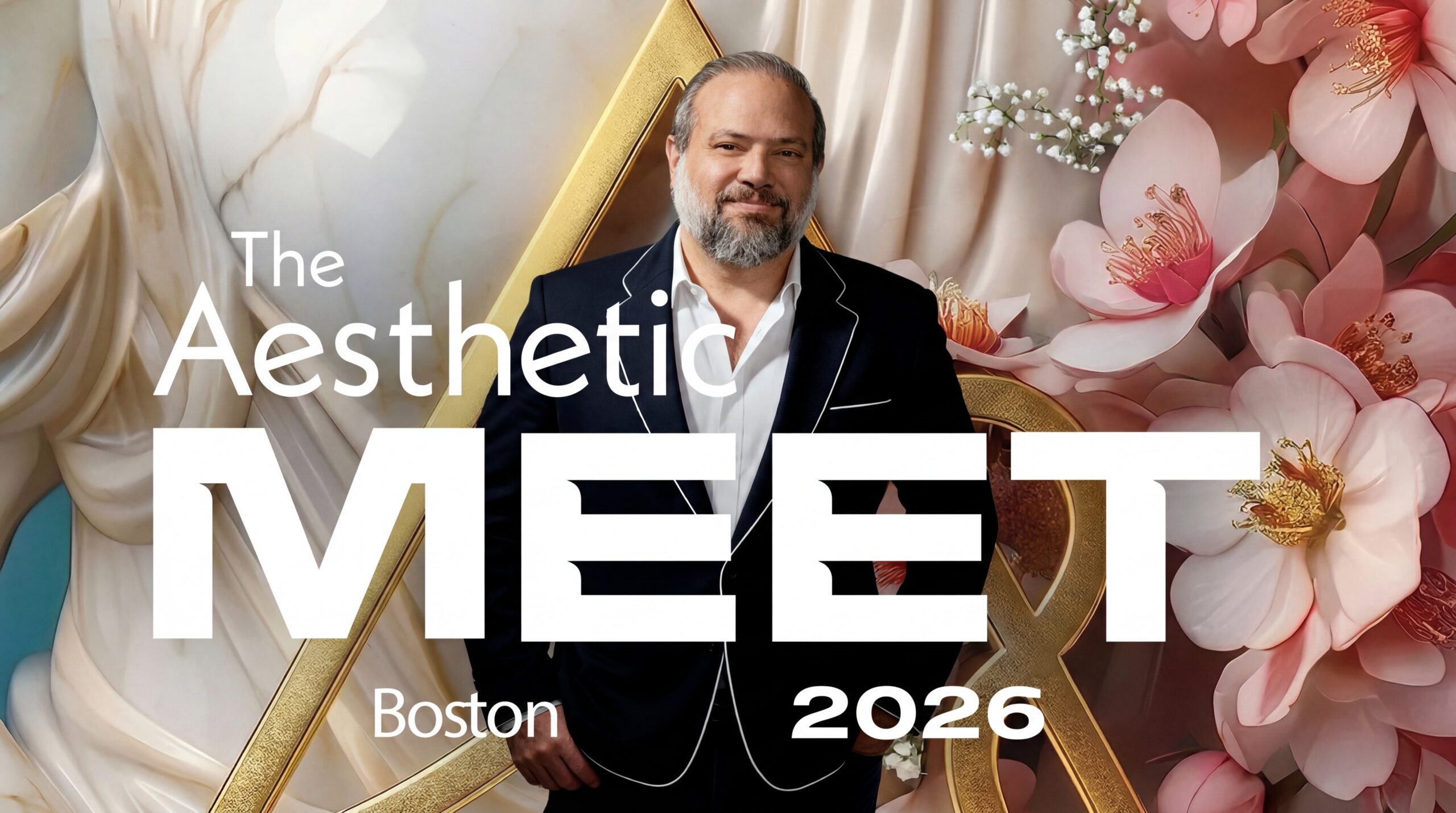
On the flight home from Boston, the woman to my left turned and asked what I had been up to for the past four days. “I was at a plastic surgery conference,” I told her. She raised an eyebrow with a smirk and a half-rhetorical question. “Was it any good, or more of the same?”
A fair question, and one that warrants a real answer.
The Aesthetic Society’s annual meeting wraps every May. This year it ran May 14 through May 17 at the Boston Convention and Exhibition Center, and I landed back in El Paso on Sunday afternoon. By the time my airplane wifi caught a signal, my Monday consult schedule was already loaded with three facelift consultations and a Ponytail Lift second opinion. The honest answer to my seatmate is yes, the meeting was a good one, because three things from it are going to change how I approach those consultations starting today.
One: Deep Plane Is Now the Standard, No Longer an Innovation
A few years ago, the deep plane facelift was the niche operation I had to promote. The older SMAS facelift (which treats only the shallow layer beneath the skin) was still the default. The deep plane facelift releases the four retaining ligaments anchoring your face to the skull (zygomatic, masseteric, mandibular and platysma) and repositions the composite of skin, fat, muscle and SMAS as a single unit, rather than pulling each layer individually. Back then, I had to campaign to win patients over to it, emphasizing the longer-lasting and more natural result.
The dynamic of these talks has completely shifted. This year at the Aesthetic Meeting, the sessions focused on the deep plane facelift were packed. The questions from the floor came mostly from surgeons who already perform the operation and were trying to refine, not learn. The technique once hailed as the future of facelift surgery is now its established present.
For you, the patient, this means a raised standard if you are considering a facelift. The deep plane facelift, performed properly, releases the four retaining ligaments and frees the deep tissue so that it can be repositioned without pulling or stretching the skin. Years of longitudinal studies show consistent results lasting at ten, twelve and even fifteen years out. The SMAS facelift, by contrast, tends to look great at three to six months and then drift downward on a faster clock.
If a surgeon mentions the deep plane facelift, your next important question should be how they were trained in it. Was it learned in a cadaver lab? Or read about on a website? I was trained in the deep plane facelift at Mayo Clinic during my plastic surgery fellowship, and I trained for the Ponytail Lift at the intermediate (Pittsburgh) and advanced (Santa Monica) Ponytail Academy courses. I keep refining the technique through advanced courses every year.
Two: Sharper Details on the Neckline
The other major area of focus in the facial rejuvenation portion of the meeting was the neckline, specifically the deep neck.
Many people are familiar with the platysma, a broad, thin muscle that runs beneath the skin of the neck and sometimes forms vertical bands as the overlying skin and underlying fat atrophy. The traditional platysmaplasty is the operation that tightens the platysma. It is a respectable operation, and it improves the look of the neck. However, it typically addresses only a superficial layer of the neck.
Beneath the platysma lies a compartment called the deep neck. Within this layer are the digastric muscles, the submandibular salivary glands and deep fat pads that, on the right anatomy, can give the lower neck a heavy or “double” appearance even after the platysma has been tightened. One of the most well-received talks at the Aesthetic Meeting made the case, from several different angles, that how well the neck holds at twelve months depends far less on what happens on the surface and more on what happens inside, in the deep neck compartment.
I have been performing deep neck work as part of my deep plane facelift for several years. This conference reaffirmed the direction and gave me a handful of specific refinements I will fold in over the coming months, on the patients whose anatomy is asking for them.
One specific debate is worth mentioning because it affects you directly. When partial reduction of the submandibular gland is on the plan, where should the incision live? A subset of surgeons is choosing a longer scar low on the neck, near the natural crease, because it makes their visual line to the gland easier. I take the opposite position. I prefer a small incision under the chin, which hides in the natural shadow. The dissection is slightly harder for the surgeon. The result for you is a better-hidden scar.
Two surgical safety habits also belong in this conversation. I operate with an instrument called the LigaSure, which seals small blood vessels with controlled energy as I work, keeping the field clean and reducing bleeding throughout the operation. I also keep a cell saver in the room as a backup. If at any point during the operation there is meaningful blood loss, the cell saver collects, washes and returns your own red cells back to you, rather than relying on donor blood. It is an inexpensive safety net for an elective operation and I see no reason not to have it running.
Three: Better Rules for the Endoscopic (Ponytail) Facelift
The endoscopic deep plane facelift, commonly referred to as the Ponytail Lift, places every incision within the hairline, which means there is no visible scar in front of the ear. The same deep-plane tissue dissection occurs. The access and visualization are different.
The Ponytail Lift is another operation in which I received formal training, at the Ponytail Academy’s intermediate program in Pittsburgh and then the advanced program in Santa Monica. Ever since I started offering the operation, I have been hunting for sharper rules about candidate selection. Boston delivered.
A succinct profile of a good candidate: a patient in her forties or early fifties with midface and brow descent beginning to bother her, robust skin elasticity still in place, and a strict refusal of any visible scar in front of the ear or in the temples.
In contrast, a poor candidate profile typically features heavier skin laxity, a jowl-dominant lower face, or anatomy that is going to require an open redrape to look right at twelve months. For that patient, an open deep plane facelift is usually the better choice.
For the midface specifically, I want to be transparent about what I have found in my own practice. I no longer rely on sutures alone to lift and hold the midface for the long term. I use a small, well-designed surgical implant (the Endotine Ribbon) placed deep beneath the soft tissue, which anchors the midface lift more durably than suture alone. In my hands, the combination delivers a stronger and longer-lasting midface lift than what I was getting with suture-only fixation.
There is also a practical evolution in how I combine these techniques. Increasingly, when your anatomy calls for an open deep plane operation, I run what I call a hybrid: the endoscopic Ponytail Lift access (with the Endotine Ribbon midface fixation) is used for the brows, forehead and midface, and an open deep plane is performed for the lower face and neck. On the right patient, that combination gives the lift quality of an open deep plane in the lower face with the scar discipline of the Ponytail Lift across the upper two-thirds of the face.
My role as your surgeon is to advise you which of the facelift techniques, if any, is most appropriate for you. I am not married to one method. My commitment is to your face looking well at twelve months.
Four: Reframing the AI Discussion
If you have glanced at headlines about “AI in plastic surgery” over the past year, you have probably seen overblown claims. I want to clear the air on this.
I went into the AI portion of the meeting with a particular stake in the conversation. I was one of the presenters in the practice-management AI track, where I spoke on artificial intelligence applied to reputation management in plastic surgery. That gives me a clearer view of what is actually working in clinic and what is still being oversold.
What artificial intelligence is doing in plastic surgery today does not include robotic surgery design, and it is not building a patient’s facial blueprint. The research is real and is moving. But AI is not yet clinically deployed for those applications in our field. Being completely transparent here is important. The alternative is being the surgeon who just plays pretend.
AI’s current and well-established role in our field lies inside patient care operations. When you call my office on a Sunday morning, or text the consult line from halfway around the world at midnight, you should not have to wait until Monday for a response. Several practical demonstrations in Boston showed front-desk AI in action. Software that provides accurate responses to commonly asked questions, schedules consultations, sends personalized pre- and post-operative care instructions, and escalates the unusual concerns directly to the right member of our team at the right moment. The figures coming out of practices already running these systems were credible.
At my practice this is not a future plan. An AI chatbot is already live on our website, available to answer your questions around the clock and to route the unusual ones to the right person on my team. An AI scribe runs during consultations so that my eyes stay on you, not on a keyboard, and so that your visit summary is largely drafted by the time you walk out of the room. Neither tool replaces human interaction. The point is to eliminate the off-hours silence in the office and to free my team to focus on the conversations that actually need a human voice. The patient with a recovery concern three days after her facelift deserves immediate, helpful assistance right when she needs it.
Why Choose Dr. Agullo for a Facelift in El Paso
Double board-certified by the American Board of Plastic Surgery and the American Board of Surgery. Fellow of the American College of Surgeons. Plastic surgery fellowship at Mayo Clinic. Clinical Associate Professor of Plastic Surgery at Texas Tech University Health Sciences Center, Paul L. Foster School of Medicine. Affiliate Professor at the University of Texas at El Paso. Ponytail Academy intermediate (Pittsburgh) and advanced (Santa Monica) training. Castle Connolly Top Doctor for thirteen consecutive years. Texas Super Doctors Hall of Fame, 2025. Aesthetic Everything Top Plastic Surgeon, 2026. Approximately sixty percent of my patients travel from outside El Paso to receive care from me, choosing the operation, not just the city.
Ready to Talk?
Your most valuable forty-five minutes of the year would be a personal consultation with the surgeon who will actually do the operation. Bring photos of yourself from a decade ago. Bring the current photos that are bothering you. Bring the questions you have not asked anyone yet. I will tell you, honestly, which facelift, if any, your anatomy is asking for, or whether surgery is the right answer for you at all.
Call (915) 590-7900, text 1-866-814-0038, or book online at agulloplasticsurgery.com. For a more technical, surgeon-to-surgeon take on this same meeting, see my piece on drworldwide.com: Three Days in Boston: A Surgeon’s Read on The Aesthetic Meeting 2026. Follow along on social at @RealDrWorldWide on Instagram, TikTok and Snapchat, @Agullo on X, or @AgulloPlasticSurgery on Facebook. #StayBeautiful