
July 28, 2026 | Injectables
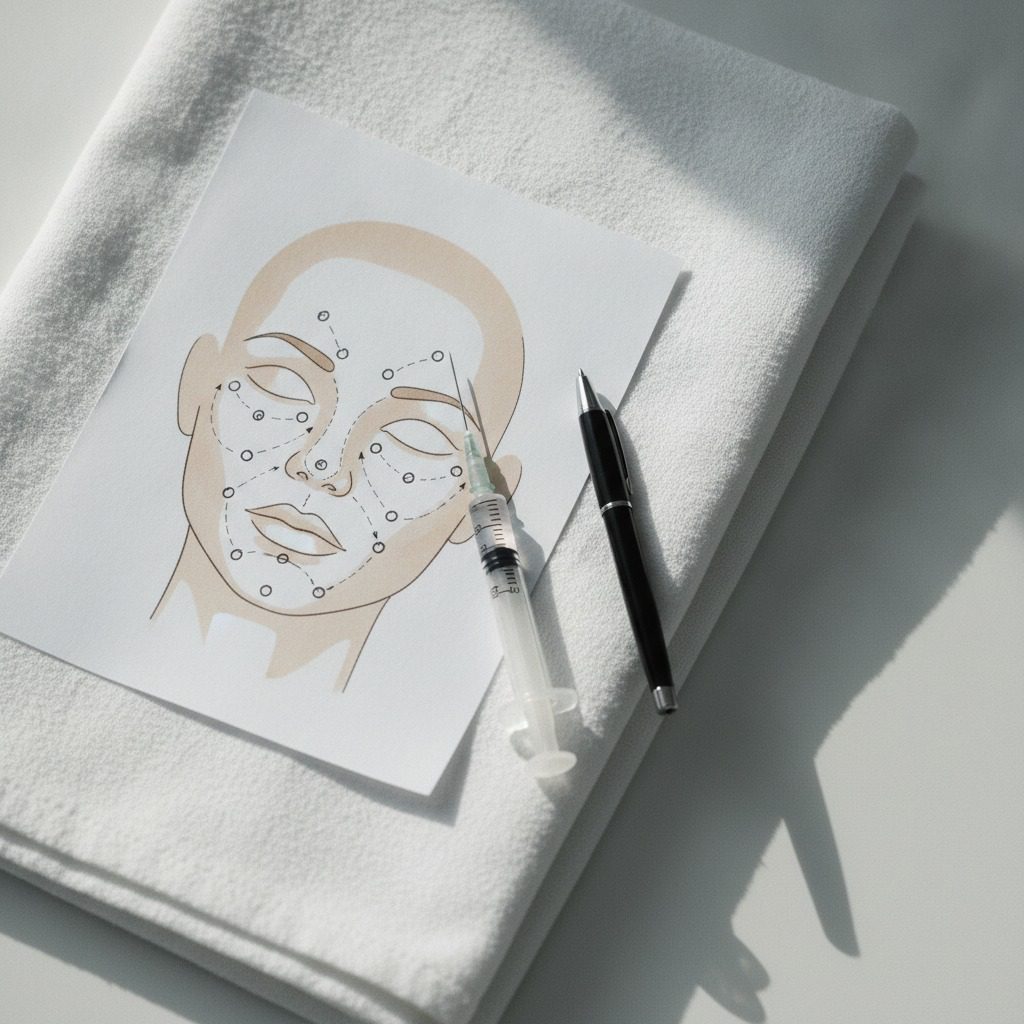
A patient last spring sat opposite me and just pointed at her forehead, then said she wanted her usual. On the way out, almost as an add-on, she mentioned she had been suffering from pain in her jaw for the past year and her dentist made her a night guard that she never remembered to use.
We treated the jaw instead.
Within 6 weeks, the lower half of her face became more sculpted. A sharp jawline she had not originally wanted now defined her. More importantly, her chronic morning headaches almost completely disappeared. This was not new Botox; she had been using the same product on her forehead for four years. This time, however, the needles had been strategically directed at a different muscle. And the person delivering the injection had shown a sliver more curiosity as she exited the treatment room.
Botox is not a way of tightening or reshaping a forehead. It is just for turning down some muscles. And the three places typically offered to just about everyone in El Paso are nowhere near the only places it works.
How Botulinum Toxin Actually Works
It blocks acetylcholine, which is what a nerve uses to transmit a message across the gap to whatever sits on the other side.
If it is muscle, there is no contraction. If it is a sweat gland, there is no sweating. That is why the same vial that softens frown lines can also quiet a clenching jaw and shut down profuse palmar sweating.
The nerve regrows those connections over the following months and the effect wears off. This point needs to be reiterated because this is overwhelmingly the most common fear I hear: it does not destroy anything and there are no irreversible effects.
What the Brands Really Change
The listed options (Botox, Dysport, Xeomin, Jeuveau, Daxxify) are all botulinum toxin A. They work with the same basic principle.
While Botox and Dysport carry proteins around the active molecule, Xeomin is botulinum toxin without them, also called the naked toxin. Jeuveau is an FDA-approved cosmetic-only botulinum toxin product that works much like Botox. Daxxify is another botulinum toxin that replaces the stabilizing protein human albumin with a stabilizing peptide and is intended to be longer lasting.
They make marginal differences visible on the face. Dysport works a day or two faster and spreads more than Botox, which makes it useful over large forehead areas and something I respect near the brow, since I do not want that spread anywhere it can weigh a brow down. Xeomin is a better alternative when results start feeling shorter than they previously did.
A note of caution for bargain shoppers. Brands’ units differ in strength. The same outcome is generally achieved with about 2.5 to 3 Dysport units compared with one Botox unit, making a low per-unit price potentially deceiving, you might end up paying more overall or getting an insufficient dose. Do not hesitate to inquire about the product used and the exact unit count at each visit.
| Product | What is different | Where I reach for it |
|---|---|---|
| Botox Cosmetic | The longest track record | Default around the brow and eyes |
| Dysport | Faster onset, wider spread | Broad forehead, larger areas |
| Xeomin | No complexing proteins | Patients who feel response has faded |
| Jeuveau | Cosmetic-only formulation | Similar behavior to Botox |
| Daxxify | Peptide stabilized | Patients wanting longer intervals |
The Classic Areas, and How to Not Look Frozen
The three FDA-cleared cosmetic areas are: frown lines (glabella), horizontal forehead lines, and crow’s feet. These are the areas where the frozen face looks most prominent.
But the thing that counts is: the frontalis, a flat, large muscle covering the forehead, is the only muscle you have got to lift up your eyebrow; each bit you put into that location will lose a little of that brow lift. And because the brow may already sit low, or has to stay up all the time simply to hold a heavy upper lid open, blanketing that muscle will not leave you looking smooth. It leaves you looking heavy.
So I treat the forehead more gently and higher up, and use a stronger hand on the muscles pulling it down (corrugators and procerus, responsible for the vertical lines between the eyebrows). Reduce the muscle activity pulling the brow down and the brow rises on its own.
As far as the crow’s feet are concerned, I just stick to the outside line of the eye, superficial. I do not attempt to erase the finest lines that run from right under the lower lash line because that way, eventually, you wind up with a lower lid that will not close and a mouth that smiles without involving the eyes.
I am not trying to erase motion. It is movement that people rely on to know what someone means. I want you to crease when you mean it.
The Treatments Nobody Offered You
This is the section patients screenshot.
Nefertiti neck lift. The platysma muscle is the broad sheet that runs from the clavicle to the jawline and pulls down on the lower lip, corner of the mouth, and skin of the neck. Relaxing the muscles in the neck and jawline smooths the contour of the jawline, elongates the neck, and gives the appearance of a tighter jaw. It looks great on neck skin that still holds good tone, but do not expect this muscle relaxation to improve sagging skin or a descended jawline. If that is what you have, you will likely need a facelift. I will figure out which of the two you are as we go through the steps.
Masseter treatment for jaw slimming and grinding. The masseter muscle controls jaw movement at the angle of the jaw. Hypertrophy causes the muscle to grow larger due to habitual clenching, giving the lower face an exaggerated, squarer appearance. Injection causes the masseter to shrink over 2 months, slimming the square angle of the jaw and, in addition, causes less clenching, a less achy jaw, and fewer clenching headaches.
Lip flip. No more fullness in the upper lip results, only enough muscle stimulation around the mouth to let the upper lip curl out slightly rather than under. This is subtle and short, often lasting six to eight weeks, and it works well in cases where you have sufficient lip but are losing the display of it.
Gummy smile. When the elevators pull up too much on the lip, you get excessive gum exposure. The right amount corrects it. There is no room for error here; those are the muscles that make the smile.
Chin dimpling. That pebbled, orange-peel chin texture is the mentalis muscle. It relaxes very well.
Excessive sweating. Botox is currently FDA approved for excessive armpit perspiration and is utilized off-label for the palms, the soles, and the scalp. This is one of the more rewarding things I treat, for individuals who cannot go to work or buy clothing without genuine sweating problems.
Chronic migraine. Approved by the Food and Drug Administration since 2010, it is injected on a specific protocol into the forehead, temples, scalp, neck, and shoulders every twelve weeks. Botox is purely preventative: it lessens the amount of migraines you experience but will not rescue the one you have today.
Why the Injector Matters More Than the Price
Every one of them is the exact same molecule. What separates a good outcome from a bad one is where it lands, how much goes there, and how deep it penetrates.
Your face is not symmetric. The high point on one eyebrow does not correspond to the high point on the other. One mouth corner pulls higher than the other. And a dose that opens one patient’s eyes might leave the next patient’s lids heavy. So in reality, mapping is judgment built out of anatomy. That is why I spend nearly a ninety-second minimum of my time working with faces prior to actually touching them. Raise the brows; Furrow the brow; Narrow the eyes; Spread a wide, beaming grin; Bare and tightly gnash the teeth.
The common concerns (sagging eyelids, brow drooping, asymmetry on either side of the smile) actually derive from the placement rather than from the product itself, and they are temporary, so they resolve on their own.
So if you are shopping on price, ask at least these three: what specific product will I be receiving, how many units will be injected, and who will administer the shots and what is their training?
Onset, Duration, and Maintenance
It should take approximately 3-5 days before any noticeable effects are observed. The complete effect can be observed around 10-14 days later. I would rather have a new patient come in at two weeks to address any remaining asymmetry than start too heavy and leave them stuck with an overtreated face while it wears off.
In most areas, it lasts 3 to 4 months. Once the muscle is reduced, masseter will often last for a longer amount of time. A lip flip is the short one, six to eight weeks. Migraine needs to be followed up every twelve weeks.
As I often repeat myself, the most beneficial piece of maintenance advice I regularly offer patients: do not wait until it has fully worn off. Staying on the schedule avoids the frustrating boom-and-bust cycle of weeks feeling fantastic, interspersed by weeks where it is obvious. Furthermore, over the years, a muscle working less strenuously gets smaller and needs fewer units.
Three Myths Worth Clearing Up
“It is unsafe.” Cosmetic doses are a tiny fraction of anything harmful, and botulinum toxin has been used medically for decades, beginning with eye muscle disorders. There are real contraindications, including certain neuromuscular conditions and pregnancy, which is exactly why it belongs in a medical practice.
“It is permanent.” It is the least permanent treatment in aesthetics. If you dislike the result, time fixes it.
“It is all the same.” It is not, and the difference is not the brand on the box. It is the map.
Why Choose Dr. Agullo for Botox in El Paso
Double board-certified by the American Board of Plastic Surgery and the American Board of Surgery. Fellow of the American College of Surgeons. Plastic Surgery Fellowship at Mayo Clinic. I am a Clinical Associate Professor of Plastic Surgery at Texas Tech University Health Sciences Center Paul L. Foster School of Medicine and an Affiliate Professor at UTEP. Castle Connolly Top Doctor for thirteen straight years.
Most of my surgery days are facial surgery. I am completely aware of the underlying facial musculature since I routinely place a scalpel just underneath that layer, and it is with that exact understanding that I approach a syringe. The injectables and Med Spa treatments are performed within an active surgical practice, so there is always somebody in the building qualified to tell you when a needle is not the right answer.
Ready to Talk?
Bring your questions and bring your face. We will spend the first part of the visit watching your muscles work, and the plan comes out of that, not out of a price list.
Call (915) 590-7900, text 1-866-814-0038, or book online at agulloplasticsurgery.com/appointments. #StayBeautiful.
@RealDrWorldWide on Instagram, TikTok, and Snapchat, @Agullo on X, or @AgulloPlasticSurgery on Facebook.
Cross-links
- Editorial version on drworldwide.com: “Botox Is Not a Menu Item: Why the Map Matters More Than the Units” (link once live)
- Practice version on swplasticsurgery.com: “Neuromodulators, Explained: How We Plan Botox for the Face, Jaw, and Neck” (link once live)