June 27, 2026 | Blepharoplasty, Eyelift
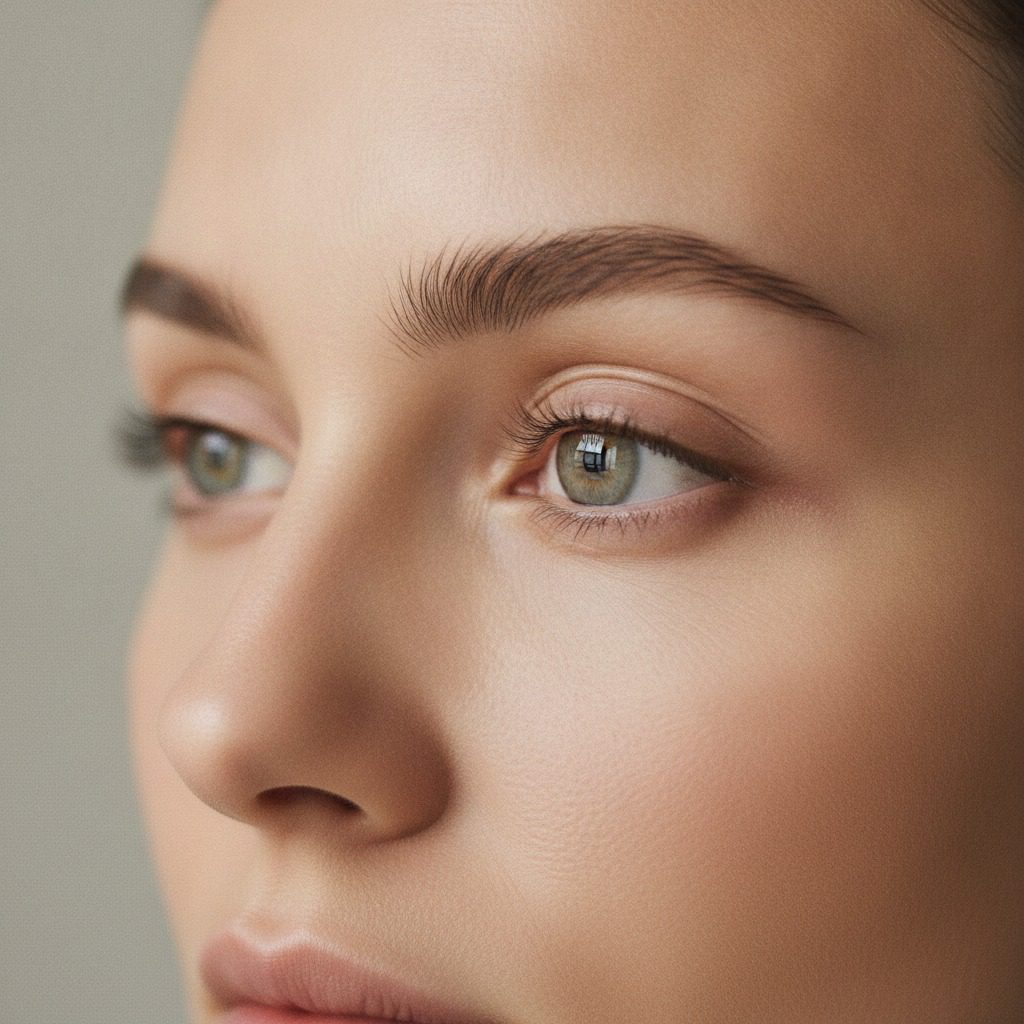
A patient sat down across from me and pointed at her own eyes. Heavy upper lids. Puffy lower bags. A tired shadow she said no amount of sleep fixed. And, she admitted, some under-eye filler from a few years back that never seemed to settle.
The eyes are where people notice age first, and they are also where the smallest, best-hidden procedures live. Here are the answers I gave her, pulled from how I explain it in the room and anonymized.
“My Upper Eyelids Feel Heavy and Uneven. Is That My Muscle?”
Usually not. When there is a true lazy eye it is the muscle, but in most cases the eyelids line up the same distance from the pupil, so it is not the muscle, it is the folds and the weight of the extra skin. For the upper lid the fix is actually very minor. I remove the fold, and the scar sits in the new crease, so when you open your eyes you do not see it.
“Will Surgery Change the Shape of My Eye?”
No, and this is the worry I hear most. I am just removing the fold, that is it. In most cases I do not have to extend out to the side, I finish right at the crease, which is what avoids that pulled, changed shape. Your line follows your natural crease, so it is already drawn. We are making you more symmetric, not different. Faces are always a little different side to side, so we make it better, but there is always some natural difference.
“What About the Bags Under My Eyes?”
Lower eyelid surgery removes the fat bag. If you keep your face still and just turn your eyes up, you will see the bags pop out more, those are what we remove, through an incision on the inside, so there is no scar on the outside. I add a little fat to blend the transition, and I often recommend Morpheus at the same time to tighten the skin. On the lower lid there are actually no external stitches.
“I Have Hollowness, Not Bags. Can You Add Volume?”
Yes, with your own fat. The face has no real pain, and fat grafting under the eyes is very safe. I do it routinely, on all my facelifts and on younger faces that simply have less tissue. It looks a little full at first because you absorb about thirty to forty percent, so I slightly overfill, and as it settles it looks completely natural because it is your own tissue.
“Isn’t Filler Risky Under the Eyes?”
I am cautious about filler in that area, and I have seen what it does. Filler placed under the eyes can hold water and stay puffy for years, and it tends to migrate rather than fully dissolve. Fat is a safer, more natural way to address true hollowing. If you already have problem filler there, dissolving it is often the first step.
“Will I Get Stitches All Across My Eyelid? Will It Scar?”
Not visible ones. On the upper lid I place the sutures subcutaneously, underneath the skin, so they do not leave the track marks you see in some photos. You might have two or three small ones that fall out on their own. On the eyelids and face, keloids are almost unheard of. Keloids happen on the ears, shoulders, sternum, and joints. On the eyelids, I have never seen one.
“How Long Is Recovery?”
The procedure takes under two hours. You will be back to normal in three or four days, with some swelling and bruising. If you bruise, it can take up to two weeks, but usually after a week you can cover it with a little makeup. Exercise at four weeks. To soften any old scars elsewhere, microneedling with PDGF, a growth factor stronger than PRP, works well over a few sessions, and you can do that at the Med Spa.
“Am I a Candidate?”
I sort this out early. Eyelid surgery is for the patient who can point to a specific thing that bothers them, heavy upper lids, persistent lower bags, a tired shadow that rest does not fix, rather than someone seeking a wholesale change to the eye. This is refinement, not transformation. Healthy patients who do not smoke heal cleanest. And because the eyes age alongside the rest of the face, sometimes the honest answer is that a facelift or fat grafting addresses the real cause, and I will tell you that instead of recommending eyelid surgery for its own sake.
“Can I Combine It With Other Procedures?”
Yes, and often it makes sense to. Upper and lower eyelid surgery fit the same anesthetic, so they are frequently done together. Eyelid work also travels well with a facelift, since both target the same aging and share one recovery window. If your concern is volume around the eyes more than skin, I may pair the surgery with fat grafting. I plan the combination around your face, not around a menu, and I will tell you when doing less is the better call.
Why I Do This Carefully
I am a double board-certified plastic surgeon, certified by the American Board of Plastic Surgery and the American Board of Surgery, with a plastic surgery fellowship at the Mayo Clinic, and I teach as a Clinical Associate Professor of Plastic Surgery at Texas Tech University Health Sciences Center Paul L. Foster School of Medicine. Eyelid work rewards restraint. The goal is for you to look rested, not operated on, and that comes from removing exactly what needs to go and hiding every incision.
See the Other Versions
For the surgeon’s editorial take, see the companion essay on drworldwide.com. For the treatment menu, see the version on swplasticsurgery.com.
Ready to Talk?
If people keep asking why you look tired, your eyes may be the answer. Come in and let me take a look.
Call the office at (915) 590-7900, text 1-866-814-0038, or book online at agulloplasticsurgery.com. #StayBeautiful.
@RealDrWorldWide on Instagram, TikTok, and Snapchat, @Agullo on X, or @AgulloPlasticSurgery on Facebook.