July 25, 2026 | Anti-Aging, Plastic Surgery News
Two days before the FDA meeting, a patient sat down across from me and asked the question I now hear almost weekly. “The BPC-157 everyone keeps talking about, is that even legal?”
My answer took ten minutes, because the truthful version was messy. It is complicated, I told her, and it is about to get a little less complicated, one way or another. Two days later the FDA’s advisory committee voted, and the ground shifted under that question. Not all the way. But it shifted.
Here is the ten-minute answer, written down for anyone who has wondered the same thing.
What the FDA Actually Voted On
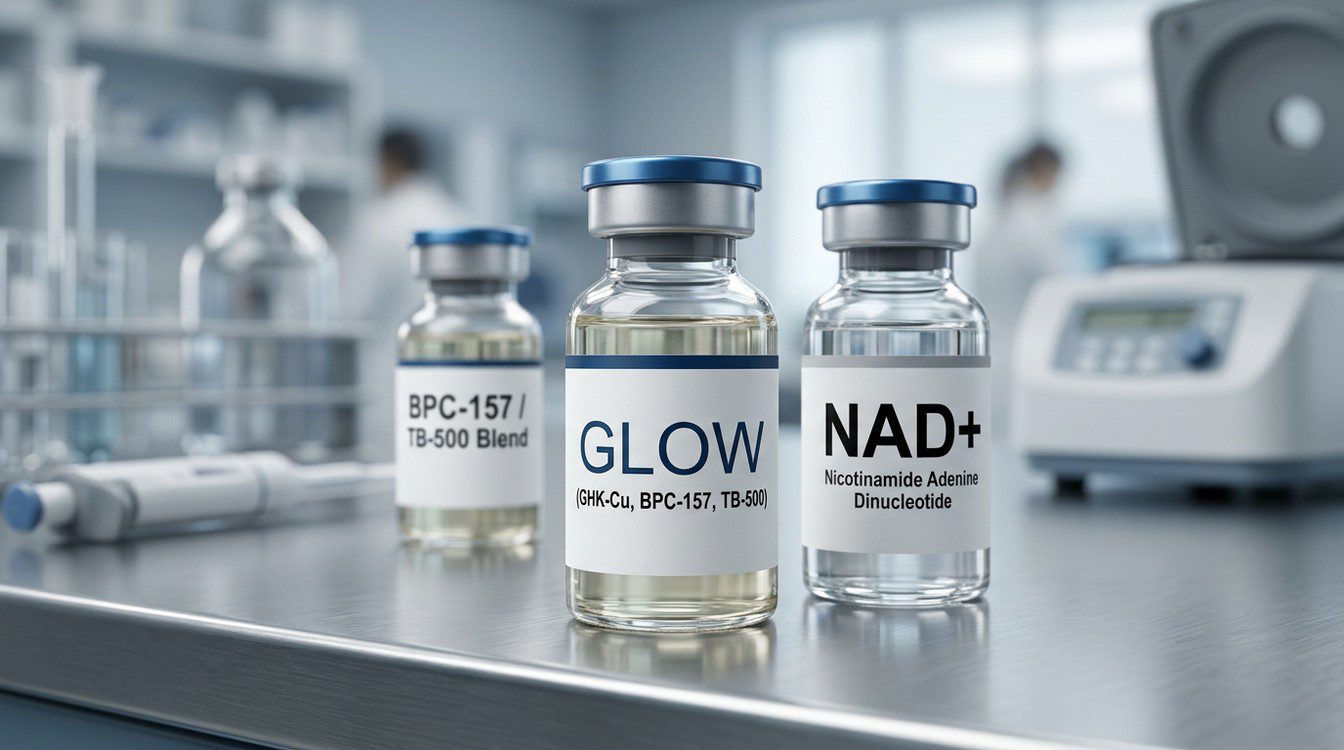
On July 23 and 24, the FDA’s Pharmacy Compounding Advisory Committee (a panel of outside experts that advises the agency on pharmacy rules) reviewed seven peptides that patients have been buying for years through wellness clinics and, more often, through the internet: BPC-157, TB-500, KPV, MOTS-c, Semax, Epitalon, and DSIP.
The vote was not about approving these as drugs. It was about the 503A bulks list. In plain English: section 503A of federal law governs traditional compounding pharmacies, the state-licensed pharmacies that prepare customized medications for individual patients with a prescription. The bulks list is the FDA’s roster of raw ingredients those pharmacies are permitted to work with. If a substance is not on the list and has no approved drug or official monograph behind it, pharmacies are not supposed to compound it.
On the first day, the panel recommended adding four peptides to that list: BPC-157, KPV, and TB-500 (each by 8 votes to 6, with one abstention) and MOTS-c (7 to 5, with two abstentions). Semax, Epitalon, and DSIP were reviewed on day two, with results still being reported as this post went up.
The Part Nobody Should Skip
The FDA’s own scientific reviewers recommended against all seven.
Their reasoning deserves respect, and I want to give you my honest take on it. I think this is overall a positive thing. I understand why the career reviewers said no. Their job is to make decisions based on evidence in large human trials, which are nonexistent as of now. But compounding was never meant to require approval-level data. That was left to the discretion of doctors, whether the treatment should be used.
There was a crackdown in 2023, but these restrictions really were not effective. They didn’t reduce the demand. What happened is that patients would go to Instagram or Telegram to acquire their peptides. So the real question wasn’t peptides or no peptides. It was really about regulated peptides or gray market peptides. Given that point of view, I think the panel made the right decision. And I’m certainly happy that this debate is occurring in a public FDA meeting, rather than in the background in some warehouse shipping unlabeled vials.
Still, patients deserve to know the vote happened over the scientists’ objection, because it frames the right level of confidence to carry: these peptides earned a regulatory pathway this week. They did not earn new evidence.
What Each of the Four Actually Is
A quick glossary, because these names get thrown around loosely.
| Peptide | What it is | What patients seek it for |
|---|---|---|
| BPC-157 | A 15-amino-acid synthetic peptide derived from a protective protein in gastric juice | Tendon, ligament, and gut healing |
| TB-500 | A synthetic fragment of thymosin beta-4, a naturally occurring repair protein | Tissue repair and recovery |
| KPV | A three-amino-acid fragment of alpha-MSH | Calming inflammation, wound support |
| MOTS-c | A mitochondrial-derived peptide | Energy metabolism and exercise capacity |
In my practice, the first three show up in structured surgical recovery protocols, where a healing window gives them a real job with a start and a finish. That is a very different thing from taking them indefinitely, and the gap between those two uses is where most of my counseling time goes.
What Changes for Patients, and When
Here is the sequence, because an advisory vote is the middle of a process, not the end.
The committee recommends. The FDA then decides whether to accept the recommendation, and putting a substance on the bulks list requires formal rulemaking, which takes time. Until that happens, nothing about this week legally changed what pharmacies can prepare. The agency can also decline to follow the vote, and given that its own reviewers opposed all seven peptides, that outcome is very much on the table.
If the FDA does follow through, the practical effect for patients is significant: these peptides could be prescribed by a physician and filled at a licensed US compounding pharmacy with testing, sterility standards, and accountability. That is the supply chain I have insisted on all along, and it stands in contrast to where most peptides are bought today.
The Misconception to Retire: “Recommended” Is Not “Approved”
I want to be precise here, because headlines this week will blur it. No peptide became an FDA-approved drug. Approval requires clinical trials, a sponsor, and a review process none of these molecules has been through. What the panel recommended is narrower: letting licensed pharmacies compound them for individual patients.
That means the burden of judgment stays exactly where it has always been, on the prescribing physician. The vote does not tell you whether BPC-157 will help your tendon. It only begins to answer who is allowed to make it. When patients ask me what the evidence supports, I tell them the animal data is promising, the human data is early, and any physician who claims certainty in either direction is ahead of the science. I wrote in more depth about that evidence honesty in my clinical read on wellness peptides.
Where I Stand, as the Surgeon Writing the Prescriptions
My position did not change this week, because the vote validated it rather than altering it. There’s really not much change. This is what we’re doing already. We prescribe peptides that have high-quality certification and quality control measures, with a certificate of analysis with every batch. Really, the biggest gain here is that the quality pharmacies become legal, and the gray market starts losing ground. And really the most important thing moving forward is actual human data to back up what we’ve observed in animal studies and self-reports.
Repair peptides like BPC-157 and TB-500 belong in a repair window, an injury or a recovery, not in an indefinite maintenance plan for a healthy patient. And nothing in a vial replaces sleep, protein, sunscreen, and training.
This is also the conversation I have most often, with a patient who is already taking something they bought online. I’d like to see the vial the patient has, where it came from, what doses, and any certificate of analysis. Most of the time, these are nonexistent. At this point, my greatest concern is not what peptide the patient is using, but whether there’s anything in the bottle at all. Most of the time there’s no sterility testing, and no guarantee that the label matches the ingredients. You’re really just injecting a mystery, and it could just be water. I tell patients all the time, do not buy peptides from Instagram, Telegram, or the internet. If you want to use peptides, you should really be getting them from a certified, licensed pharmacy that’s going to do the appropriate testing, and that’s going to have the actual dosing and the actual ingredients necessary.
My training shapes that caution. I am double board-certified, fellowship-trained at the Mayo Clinic, and I teach as a Clinical Associate Professor of Plastic Surgery at Texas Tech University Health Sciences Center. The habit of asking “where is the human data” does not switch off because a molecule is fashionable.
Ready to Talk?
If you are using a peptide now, or considering one, bring your questions and bring the vial. A consultation covers your goals, your health history, and whether a defined protocol makes sense. If it does not, I will say so.
Call (915) 590-7900, text 1-866-814-0038, or book online at agulloplasticsurgery.com. #StayBeautiful
For the editorial version of this story, including my read on the politics of the vote, see The FDA Just Blinked on Peptides on drworldwide.com. For the practice’s peptide program, see Southwest Plastic Surgery.
@RealDrWorldWide on Instagram, TikTok, and Snapchat, @Agullo on X, or @AgulloPlasticSurgery on Facebook.