
August 01, 2026 | Injectables
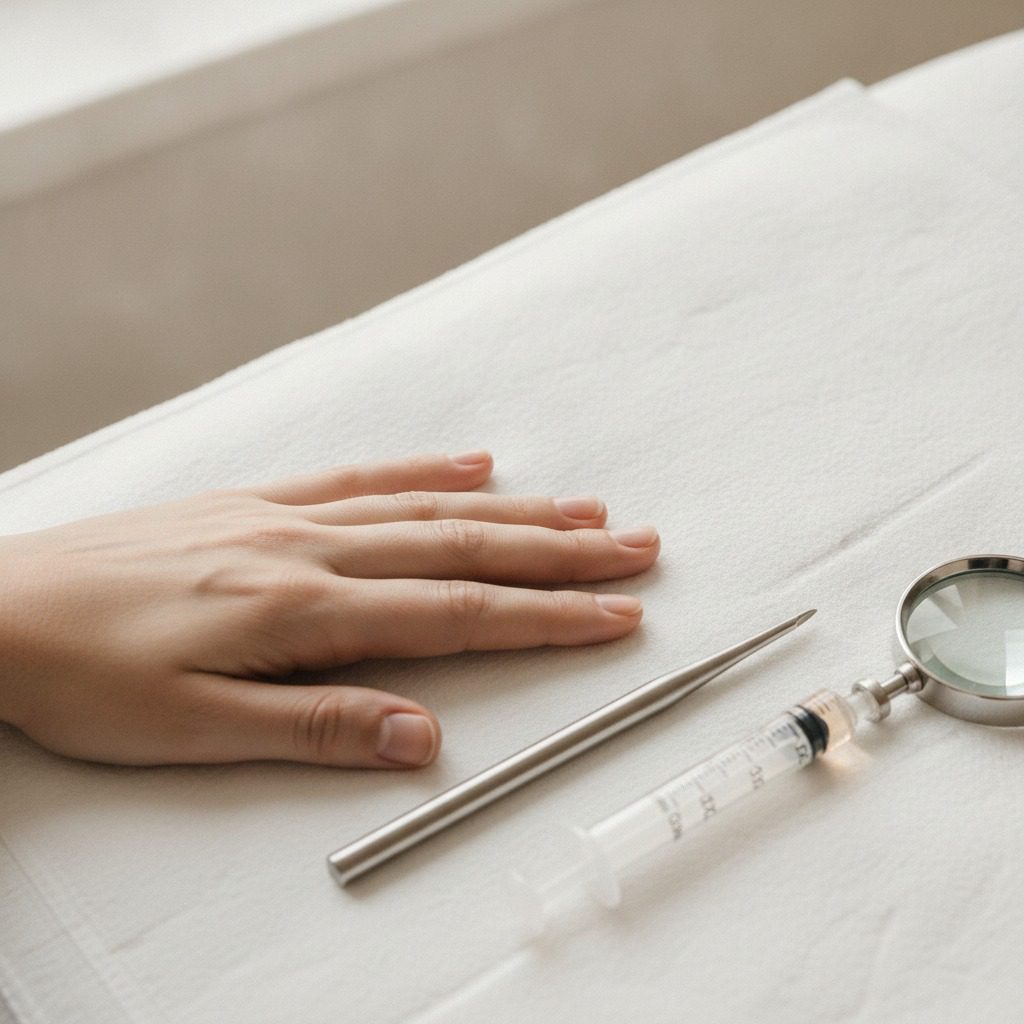
A patient sat down across from me a few weeks ago for a facelift consultation, and right as she was gathering her things to leave, she held up both hands and asked, almost apologetically, “Is there anything you can do about these?”
I get that question all the time now, usually tacked on at the end like it’s a minor thing. It isn’t. Hands are one of the fastest parts of the body to show age, and most people have never had anyone explain why, or what actually works.
I recently spoke with a Daily Mail reporter about exactly this, since hand filler has become one of the more talked-about anti-aging trends of the year. My answer to the reporter was the same one I gave my patient: it works, but only for the right hand and the right problem.
Why Hands Age the Way They Do
The skin is thin over the fat that cushions the tendons and veins underneath, and that fat layer gets thinner over time, much like it does in the face, except it’s sped up by sun exposure and the ordinary wear of everyday use.
As the fat disappears, the tendons and veins start to show through. Sun damage adds sunspots and uneven pigment on top of that. It’s a triple threat, and I check for all three before I recommend anything.
Most patients notice the change in a photo or on a video call and just chalk it up to getting older. It is age, but it’s really three different processes moving on three different timelines: fat loss, skin quality, and sun damage. Each one gets a different treatment, which is why filler isn’t always my first move.
The Exam I Actually Do
I look at three things separately: how much volume is left, what the skin quality looks like, and how much pigment damage is present. Each one points to a different treatment, and most patients need a mix, not just filler.
For the patient who asked, her volume was good but her sun damage was heavy, so we skipped filler entirely and started with IPL instead. That surprised her. She had assumed filler was the whole conversation.
Why I Use a Cannula, Not a Needle
Hands are unforgiving anatomy. The skin is thin, the tendons sit right beneath it, and the veins run close to the surface with very little padding to protect them. Any technique mistake shows up immediately, and it shows up on a part of the body a patient looks at all day long.
That’s why I inject hand filler with a cannula, a blunt-tipped instrument that is far less likely to puncture a vessel than a sharp needle moving through the same tissue. I also use ultrasound guidance so I can see the vessels I’m working around in real time instead of relying on anatomy landmarks alone.
Expect swelling, bruising, and a few days of stiffness that can make gripping things uncomfortable. Small lumps can form if the filler isn’t massaged properly after injection. The serious risk, which is rare, is compressing or injecting into a blood vessel and cutting off circulation. Cannula technique and ultrasound guidance are specifically what prevent that, and they’re not optional in my hands.
Who Isn’t a Candidate
I won’t inject filler over an active skin infection, and I’m cautious with patients who have uncontrolled autoimmune or connective-tissue disease, a history of severe filler reactions, or blood thinners that can’t be paused.
There’s one more group worth mentioning honestly. Some patients want their prominent joints or visible hand bones to disappear, not the empty space between them refilled. Filler doesn’t do that. It adds soft tissue volume; it doesn’t camouflage bone or joint structure. I tell those patients the truth in the consult room rather than injecting anyway, because a filler that can’t deliver what they actually wanted isn’t a good outcome for either of us.
What a Hand Appointment Actually Looks Like
There’s no gown, no operating room, and no downtime built into the schedule the way there is with surgery. A hand appointment starts with the same exam I use for anything else: I look at the skin under good light, feel for how much padding is left over the tendons, and ask how the hands have been used over the decades: gardening, driving, years of unprotected sun on a steering wheel.
If filler is the right answer, the injection itself takes about fifteen to twenty minutes, split across both hands. Patients ice afterward and go straight back to normal activity, though I ask them to skip the gym for a day or two if we’ve treated volume loss, since heavy gripping right after can push swelling around before the filler settles. IPL and laser sessions run in a similar window, sometimes shorter, and the visible sunspot lightening shows up over the following one to two weeks as the treated pigment surfaces and flakes off.
None of this requires anesthesia beyond a topical numbing cream, and most patients are back at a desk or a dinner reservation the same day. The honesty of the exam matters more than the speed of the treatment. I’d rather spend ten extra minutes figuring out which of the three problems is actually driving what a patient sees in the mirror than treat the wrong one quickly.
Why Choose Dr. Agullo for Hand Rejuvenation in El Paso
Double board-certified by the American Board of Plastic Surgery and the American Board of Surgery. Fellow of the American College of Surgeons. Plastic Surgery Fellowship at Mayo Clinic. Clinical Associate Professor of Plastic Surgery at Texas Tech University Health Sciences Center Paul L. Foster School of Medicine and Affiliate Professor at UTEP. Castle Connolly Top Doctor for thirteen consecutive years.
Most of my week is spent in the operating room working around vessels and nerves that don’t forgive a wrong move. That same standard is what I bring to a fifteen-minute hand appointment. If a hand doesn’t need filler, I’ll tell you. If it does, it gets treated with the same anatomical caution as anything else in this practice.
Ready to Talk?
Bring your hands to the consultation, not just your face. We’ll figure out which of the three problems you actually have before anything gets injected.
Call (915) 590-7900, text 1-866-814-0038, or book online at agulloplasticsurgery.com/appointments. #StayBeautiful.
@RealDrWorldWide on Instagram, TikTok, and Snapchat, @Agullo on X, or @AgulloPlasticSurgery on Facebook.
Cross-links
- Editorial version on drworldwide.com: “Hands Don’t Lie: Inside the Filler Trend Everyone’s Suddenly Asking About” (link once live)
- Practice version on swplasticsurgery.com: “Hand Rejuvenation, Explained: How We Approach the Newest Anti-Aging Trend” (link once live)