August 01, 2026 | Earlobe Repair
A patient came in last spring wearing her hair down on one side. She had been styling it that way for two years, ever since her toddler grabbed a hoop earring and pulled. The tear went clean through the lobe.
The repair took twenty minutes. She wore her hair up to her next appointment.
Earlobe repair is one of the smallest procedures I perform and one of the most appreciated. Here is exactly how it works, what it costs, and what we can do for the newer problem I am seeing weekly: the deflated earlobe.
Why Earlobes Tear and Stretch
The most common cause of earlobe tears, or elongated piercings that haven’t torn quite yet, is the chronic use of heavy earrings. It’s a gradual stretching that happens over time.
And as we age, we also lose some of the fat and collagen in the earlobes, which decreases the tissue strength, and the stretching or tearing can speed up. Many times it can be traumatic, from the earring getting stuck on something and pulling, or a baby pulling on the earring.
One more cause is new: rapid weight loss. Aging earlobes have increased in demand, not just because of aging, but also because of the GLP-1s like Ozempic and tirzepatide. Patients lose the good fat in the earlobes, and these become deflated or elongated.
The Repair, Step by Step
The repair itself is rather simple.
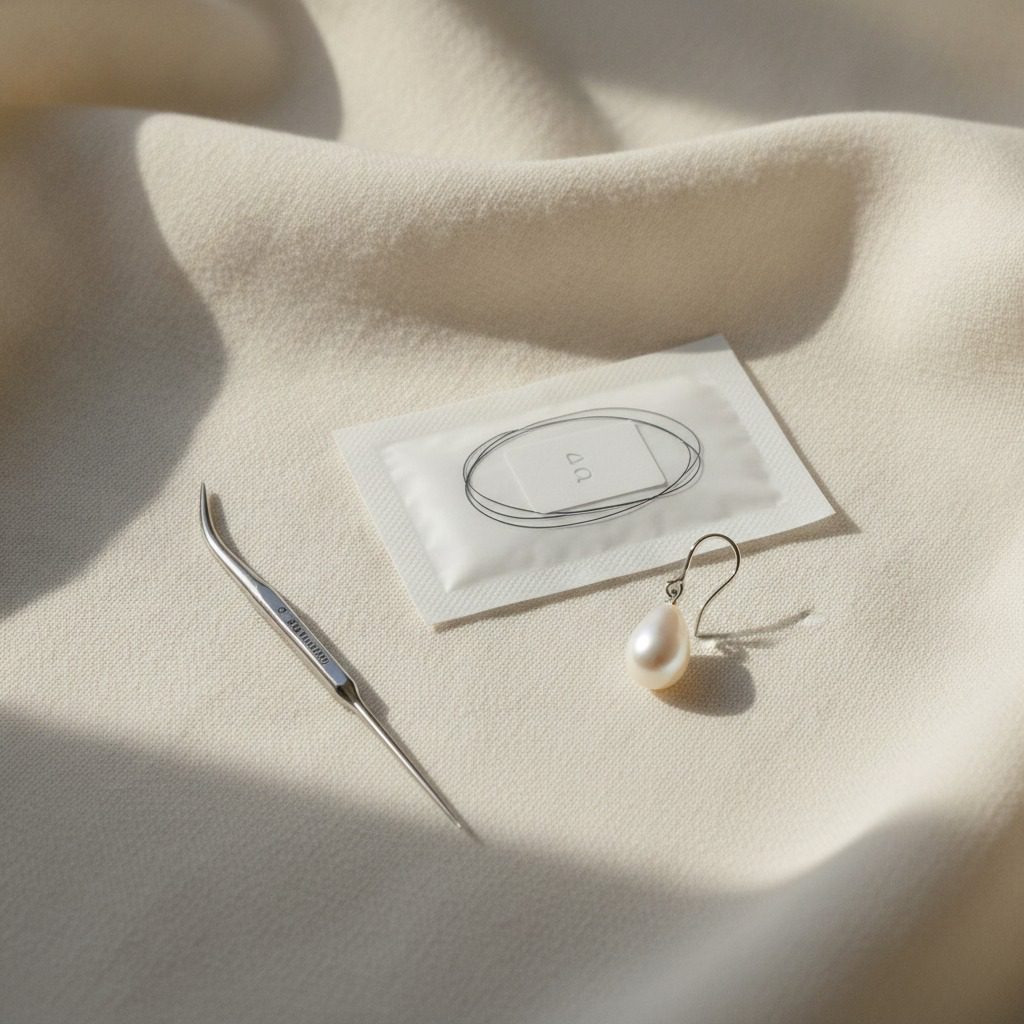
The first step is to do it in a sterile fashion, so we sterilize the area to decrease the risk of any infection. Then we use local anesthesia, which is infiltrated into the earlobe. This is the part that can sting a little bit, but it’s very quick. After that, the whole area is anesthetized, and you don’t feel anything.
Depending on how big the tear or stretch is, we cut out that area (the lining of the old tract has to go, or the repair will not hold), and then we suture it in a layered fashion, approximating the deep tissue coming all the way up to the superficial skin layer. This procedure usually takes fifteen to thirty minutes. And to keep the ear natural, we rearrange the tissues so there’s no puckering or indentations.
The approach for a partial tear versus a complete split is about the same. The only thing that’s affected is the length of the incision, and whether it goes all the way to the edge or can be repaired within the tear itself.
Worth knowing: not all tears happen on the earlobe. They can happen anywhere there is a piercing, including the belly button, genitalia, nose, and the helical rim of the ear. The same sterile, layered-closure repair applies, and it is the same closure philosophy I use across my in-office excision practice.
Re-Piercing Timeline
To re-pierce, we usually wait three to six weeks depending on the area. For ears, it’s usually three weeks, and we can re-pierce here in the office. We sterilize the earring or stud that you’re going to use, which will need to remain in place for about a month before it can be taken out.
My one standing recommendation afterward: save the heavy statement earrings for occasions, not for every day. The lobe you just repaired stretches by the same mechanism as the first one.
The Deflated Earlobe: Filling Options
For lobes that are empty and wrinkly rather than torn, we can do various things that involve filling the earlobe back.
Hyaluronic acid fillers like Juvederm or Restylane are temporary, so those you would have to repeat about every year or so. We can use Lipoderma, which is a donor fat that we can inject into the area. Or we can use the patient’s own fat and inject it into the area. And sometimes, if there’s a lot of redundant skin in the earlobes, we may actually have to trim and tuck the earlobe to decrease its size and make it look more youthful.
A recent example: a bride-to-be in her thirties who had lost about fifty pounds with Ozempic in four months noticed her earrings didn’t sit the same way anymore. We injected one syringe of Lipoderma into each earlobe. That filled in the void, plumped the skin, and actually reduced the size of her piercings, so the earrings were sitting like they used to. The procedure took about thirty minutes. She was back at work the next day and back at the gym in five days.
Filler maintenance can be scheduled through the med spa, and when the surrounding skin quality needs attention, we pair the lobe work with laser treatments.
Cost and Logistics
The cost range usually starts around a thousand dollars, and the final cost depends on the type of anesthesia, the location, and the size of the defect. This is a cash-based service with one upfront quote, no insurance involvement and no preauthorization. Most earlobe cases can be quoted from an emailed photo.
Why Choose Dr. Agullo
I am a double board-certified plastic surgeon, fellowship trained at the Mayo Clinic, Clinical Associate Professor of Plastic Surgery at Texas Tech University Health Sciences Center, and a Castle Connolly Top Doctor for thirteen consecutive years. Small procedures get the same standards as big ones: sterile technique, layered closure, and a result that looks like nothing ever happened.
Ready to Talk?
If a torn or deflated earlobe has been changing how you wear your hair or your earrings, send a photo for a quote. Call (915) 590-7900, text 1-866-814-0038, or book a consultation online. #StayBeautiful
@RealDrWorldWide on Instagram, TikTok, and Snapchat, @Agullo on X, or @AgulloPlasticSurgery on Facebook.
Companion reads: the editorial take on the Ozempic earlobe at drworldwide.com, and the practice overview at swplasticsurgery.com.