June 21, 2026 | Breast Augmentation, Breast Implants, Techniques
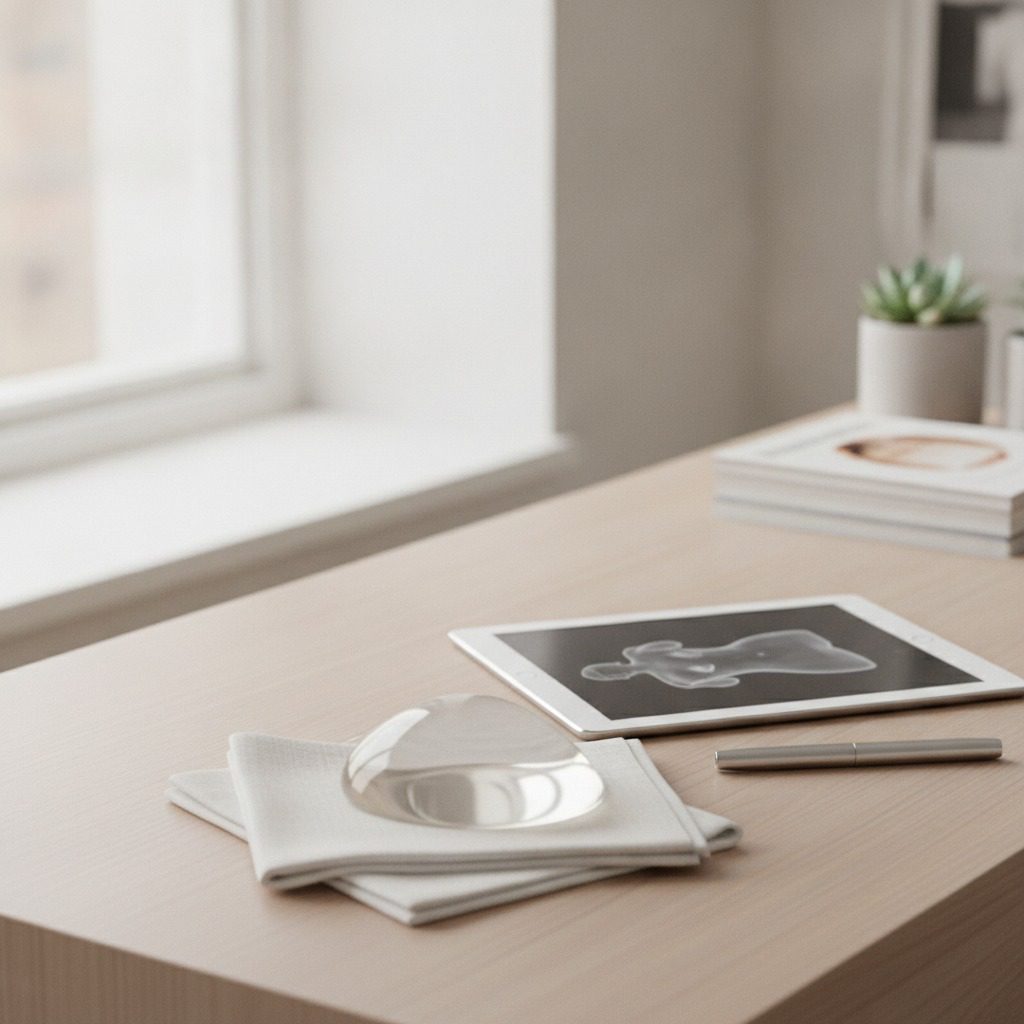
A patient sat down across from me, set her phone on the desk, and pulled up a photo of herself ten years and two pregnancies ago. She wanted that fullness back, and she had read enough online to ask a pointed question. Was there really a version of this surgery that did not put her out of commission for two months?
There is. It is called the Preserve augmentation, and below are the answers I gave her, pulled from how I actually explain it in the room and anonymized.
“What Makes Preserve Different From a Regular Augmentation?”
The Preserve is prepectoral, which means the implant sits in front of the pectoralis muscle and behind your breast gland. The phrase I use is above the muscle, behind the breast gland. We do not cut the muscle at all.
A traditional augmentation puts the implant behind the muscle and partially releases that muscle off the chest wall. That release is the reason the old version of this surgery hurt for six to eight weeks. Preserve skips it entirely because we never go under the muscle.
“How Do You Make Room Without Cutting?”
I create the pocket with balloon dissection. The tissues are gently pushed outward rather than cut, with no electrocautery, and the pocket is defined by your breast’s own ligaments. Those ligaments are what hold the implant in position, so I do not need mesh to support it.
Because I am not cutting through the area, the nerves and arteries are preserved. That gives you a higher likelihood of keeping sensation and breast function than an operation that divides those structures.
“How Do You Decide My Size?”
Cup size is where the conversation starts, but it is not how I measure. I plan from your dimensions and a Chrysalix 3D simulation, so you see your likely result before we book anything.
Most people have a little natural asymmetry, and that is normal. I tell patients their breasts are sisters, not twins. I will often use slightly different volumes side to side to bring you closer to even. And because the implant sits above the muscle, I can place the volume exactly where your breast needs it. A smaller implant can read as a larger size and add a little lift, which means a lighter breast for the same look.
“Which Implants Do You Use, and Do I Replace Them Every Ten Years?”
I use Motiva Ergonomix implants. The old ten-year replacement rule does not apply to them. The rupture rate is under half a percent, and they carry a lifetime guarantee.
They have a nano-surface called SmoothSilk that produces the lowest inflammatory response of any implant and an extremely low risk of capsular contracture. They are soft, the gummy bear type, and they move with your body and settle into a natural teardrop shape when you stand.
“What Is Recovery Honestly Like?”
This is the part that surprises people. I do the procedure under light conscious sedation, so you breathe on your own and will not remember much. I place Exparel, a long-acting numbing medication, between the ribs, and it keeps the breast comfortable for about the first three days.
The incision is two and a half to three centimeters in the fold under the breast. The implant placement itself takes about thirty minutes, and most patients can raise their arms overhead and go home within an hour. Many return to work the next day or within one to three days, and the gym is reasonable at about two weeks if augmentation is all we did. If we add a lift or liposuction, the timeline lengthens, and I will tell you exactly how.
“Does Dense Breast Tissue or My Mammogram Change Anything?”
Dense tissue does not change the procedure. Because the implant sits in front of the muscle and behind the gland, it does not interfere with how the operation is planned. If you are due for a mammogram and your last one was over a year ago, I would get this year’s before surgery, and we can send the order or coordinate with your primary doctor.
“Is Preserve Always the Right Answer?”
No, and I will say so honestly. A very thin patient with little breast tissue sometimes needs a different plan, and in those cases I may recommend fat injection augmentation or a standard implant approach instead. The point of the consultation is to match the technique to your anatomy, not to sell you one operation.
“Am I a Candidate?”
I sort this out at the consultation. The Preserve is a strong fit if you want more fullness, especially to restore what changed after pregnancy, breastfeeding, or weight loss, and you have enough of your own breast tissue to cover an implant placed above the muscle. Because the technique preserves your ligaments and nerves, it appeals especially to patients who care about keeping sensation and breast function. Healthy non-smokers heal cleanest. If your tissue is very thin, I will tell you honestly that a different plan may serve you better, which is the whole reason we do an exam and a simulation before booking.
“How Long Will the Result Last?”
Longer than the old rules suggest. The Ergonomix implants I use are not on a ten-year clock, with a rupture rate under half a percent and a lifetime guarantee. Because the implant sits above the muscle and is held by your own ligaments, it is not fighting the muscle every time you flex, so you avoid the animation distortion, the implant moving when you contract your chest, that bothers some patients after a submuscular augmentation. The result tends to settle naturally and age well, which is exactly the point of preserving your anatomy in the first place.
Why I Do It This Way
I am a double board-certified plastic surgeon, certified by the American Board of Plastic Surgery and the American Board of Surgery, and a Fellow of the American College of Surgeons. I completed my plastic surgery fellowship at the Mayo Clinic and teach as a Clinical Associate Professor of Plastic Surgery at Texas Tech University Health Sciences Center Paul L. Foster School of Medicine. Motiva trained me directly as one of roughly twenty selected surgeons in the country, and I traveled to Costa Rica twice for that certification. I chose this technique because preserving your own anatomy recovers faster and ages better.
See the Other Versions
For the surgeon’s editorial take on why I switched, see the companion essay on drworldwide.com. For the practice overview, see the version on swplasticsurgery.com.
Ready to Talk?
The honest answer to which size and implant fit you requires an exam and a 3D simulation. Bring your photos and come in.
Call the office at (915) 590-7900, text 1-866-814-0038, or book online at agulloplasticsurgery.com. #StayBeautiful.
@RealDrWorldWide on Instagram, TikTok, and Snapchat, @Agullo on X, or @AgulloPlasticSurgery on Facebook.