
September 15, 2026 | Abdominoplasty, Body Contouring, Liposuction
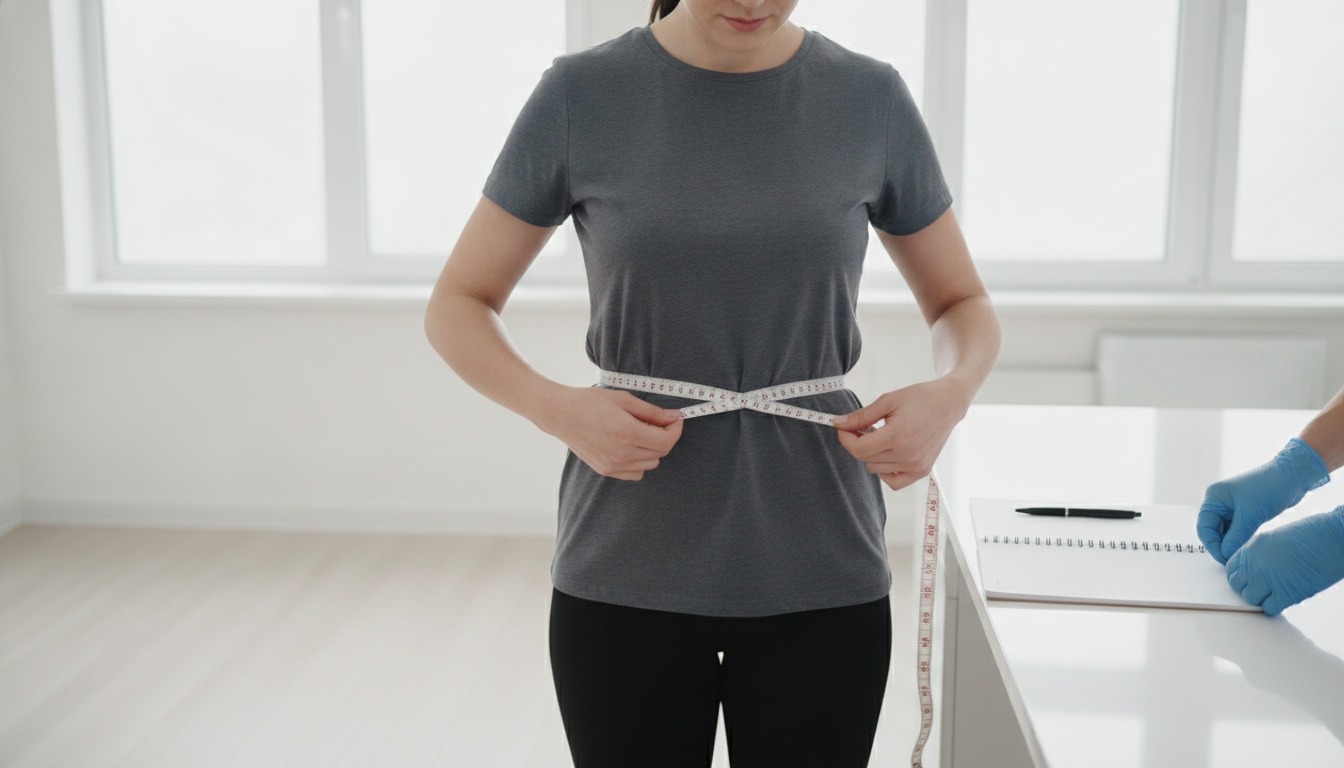
Woman’s World asked me last month whether waist-to-height ratio beats BMI for predicting heart risk. It usually does, and the reason matters to anyone considering body contouring.
What is BMI actually measuring?
Dr. Agullo: “BMI stands for body mass index, and it measures weight relative to height. That’s really all it measures. It doesn’t know whether the weight is muscle, fat, bone, or fluid, nor does it know where on the body the weight sits. It’s calculated by dividing the person’s weight by the square of their height. It was never designed as a personal health test, but it ended up being used in medicine because it was a simple calculation.”
Medicine has moved away from it. Does that match what you see?
Dr. Agullo: “Yeah, that matches my experience. But BMI is still the number I’m required to record, and for insurance purposes many decisions are made on this BMI number. I can have two patients walk in with the same BMI and a completely different body composition and health situation. One can be a former athlete still carrying dense muscle, and the other has lost muscle over the years and replaced it with fat, with visceral fat sitting deep in the abdomen. The visceral fat is really the bad guy, the one that drives up blood pressure, blood sugar, and inflammation.”
So what does waist-to-height ratio measure instead?
Dr. Agullo: “Waist-to-height ratio is your waist measurement divided by your height. So if your waist is 34 inches and you are 68 inches tall, your ratio is 0.5. This is measuring where the weight sits, not how much of it there is. Like in the previous example, two people with the same BMI can have the weight distributed in different places. By measuring the waist, we’re measuring the area that holds the visceral fat, the fat around the organs, the liver, and the intestines.”
What is the target?
Dr. Agullo: “The rule is simple. You should keep your waist to less than half your height. A ratio under 0.5 is the goal. 0.5 to 0.6 is where the risks start to rise. Above 0.6 is concerning, and patients should have a full workup with their primary care doctor to check blood pressure, blood sugar, and cholesterol.”
Why This Matters Before Surgery
Liposuction and a tummy tuck work on the fat between the skin and the abdominal wall. Visceral fat sits behind that wall, and no cannula reaches it. A firm, round abdomen with a high ratio is carrying volume surgery cannot take out.
So the tape tells me whether an operation will deliver what the patient is picturing.
Dr. Agullo: “A great deal, because visceral fat is very responsive. It’s usually the first fat to arrive when your habits slip, and the first fat to leave when your habits improve. This is good news, because you can monitor your waist circumference as you’re dieting and often see more change than on the scale, which can be discouraging.”
How do you measure it at home?
Dr. Agullo: “Yes, it’s a very simple technique. You just need a tape measure. Stand up straight and measure your height. While standing straight, find the space between your last rib and the top of the hip bone, and right in between those you’re going to measure your waist circumference. You want this snug, and breathe normally. Don’t suck in your abdomen. Then you divide your waist in inches by your height in inches, and you get the ratio. It’s probably better to measure in the morning before eating, and take measurements twice to use an average.”
Does age or sex change how to read it?
Dr. Agullo: “Sex doesn’t actually matter much with this ratio, which is quite an advantage. But as we age, things change, in particular in women over 50. Around and after menopause, the drop in estrogen changes where the body stores fat. It moves from the hips and thighs to the abdomen. So your BMI stays the same, but there’s more visceral fat than before, and the waist-to-height ratio rises.”
Would you drop BMI entirely?
Dr. Agullo: “For most people, the waist-to-height ratio is a better number and more useful. I wouldn’t throw away BMI. There are a lot of studies that give us information tied to BMI metrics, specifically in the high obesity ranges, so it’s still useful in anesthesia and surgical planning and drug dosing. But for the more normal ranges of BMI, people often get classified in the wrong category, and it doesn’t give us a true picture of where the visceral fat is located.”
Four Things That Move the Number
Dr. Agullo: “One, get enough protein and spread it out. Aim for roughly 25 to 35 grams at each main meal. Protein preserves muscle, and muscle is what keeps your metabolism from sliding as you age.
“Two, lift something heavy two or three times a week for 30 to 40 minutes. The combination of resistance and cardio burns calories during the session, and the resistance builds the muscle that keeps burning calories the rest of the week.
“Three, get enough fiber, about 25 to 35 grams a day from food. Fiber slows how fast sugar enters your bloodstream, which blunts the insulin spikes that encourage the body to store fat centrally. It also helps keep you fuller for longer.
“Four, protect your sleep, seven to nine hours on a consistent schedule, including weekends. Short sleep raises cortisol, a stress hormone that encourages abdominal fat.”
Dr. Agullo is certified by the American Board of Plastic Surgery and the American Board of Surgery, completed his plastic surgery fellowship at the Mayo Clinic, and serves as Clinical Associate Professor of Plastic Surgery at Texas Tech University Health Sciences Center.
Book a Consultation
Bring your measurements. A consultation that starts with where your fat actually sits produces a more honest plan than one that starts with a goal photograph.
Call (915) 590-7900, text 1-866-814-0038, or book online at agulloplasticsurgery.com. #StayBeautiful