September 21, 2026 | Body Contouring, Weight Loss Surgery
Every week a patient sits in my El Paso office at goal weight and asks the same three questions. Is it too soon? Will the skin tighten if I wait? What happens if I gain it back?
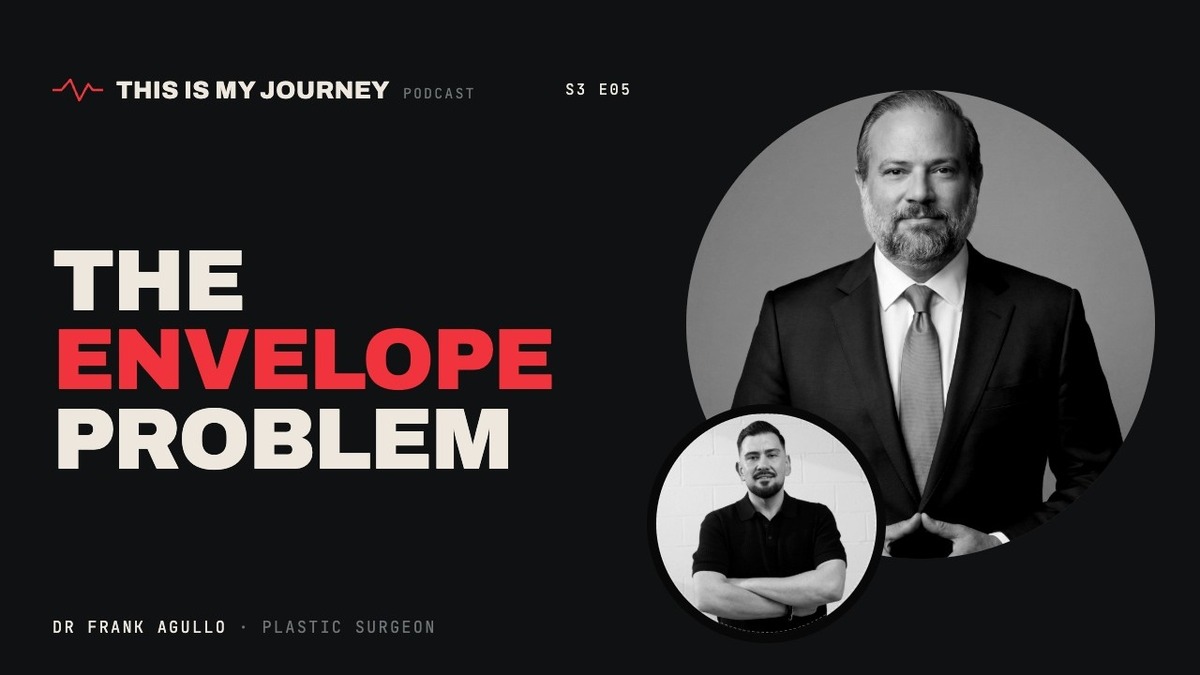
This week I answered all three on a podcast, for an audience of people who are living it. Marc McKee hosts This Is My Journey from the UK. He lost 126 pounds on Mounjaro and built the show for people who could not find straight answers.
The full episode is below. The surgical answers are underneath it.
Is it too soon?
“We had everything standardized for bariatric surgery. They would lose weight for a year or a year and a half, stabilize, and then we would wait six months. With GLP-1s, patients are losing the weight a lot faster, getting to goal faster, and plateauing faster. What I’ve been seeing is about a six to nine month weight loss and then about a three month stabilization until we’re ready for surgery.”
There is a second reason GLP-1 patients do well on the table, and it is one I do not hear discussed enough.
“GLP-1 patients are healthier than bariatric patients, because bariatric patients also have the nutritional deficit. We’re taking out intestinal parts that absorb nutrients. So the complications are lower and the healing is better.”
I laid out the full timing framework in an earlier post. The episode is where I say it out loud.
Will the skin tighten if I wait?
“Younger patients are going to retract better. Everybody retracts some, probably not as much as we would want, and it’s also sooner than people think. It really happens in the early stages, and I think at a maximum of a year it’s all done. That’s why in bariatric surgery we waited a year.”
“The tightening process is usually less than what people hope for.”
And a number I gave Marc that I will repeat here: “If you’re losing 40 pounds, I think you’re going to need a surgical procedure.”
Why the whole body, not just the tummy
“Everybody’s expecting the midsection to get smaller and to have some skin laxity there. The skin envelope has been stretched out. It’s lost those connections with elastin, and you can’t make any new elastin. Once you deflate, just like a balloon, the outside wrinkles.”
“The breast loses its fat content, and this is for both men and women, which is also surprising. The same thing happens in the buttock area. A lot of these patients losing weight fast are not taking in enough protein, so they’re also losing muscle. About a quarter of the weight loss is going to be muscle mass. Some patients have it in the inner thighs, the arms, the back. It’s a 360 thing.”
The face is its own story, and it goes first. I covered it in the face after weight loss and on the Ozempic Face page.
What if the weight comes back?
“I don’t think there’s a huge health hazard or urgency. With the weight loss you got healthier. If you gain it back, some of your other problems might come back, like blood pressure or glucose intolerance. But the skin will keep stretching. The body is amazing, it knows how to accommodate things, but it does undo some of the things we do surgically. So we have to go back in for a touch-up or retightening.”
Which is why I say this in every consult, and said it to Marc:
“The main thing is not to bounce back. When you stop taking it, if we have a bounce back, that can pretty much destroy everything we did.”
The expectations conversation
“That’s the toughest part of my job, telling patients that’s not possible. We have to set that from the beginning, otherwise nobody’s going to be happy.”
“Some patients bring wish photos and you have to coach them. This patient you’re showing me is 20 years old, you’re 40. Or this patient’s BMI is 20 and you’re still at 30. You look much better than you did before, but we can’t compare apples to oranges.”
“Patients who have lost a lot of weight, we do these surgeries and we’re pulling as tight as we can, but the skin, because it’s lost that elastin, is going to give again. We lose some of the result over the first six months. A lot of times, six months later, we have to do a little nip and tuck to tighten things up.”
Why choose Dr. Agullo
Double board-certified, American Board of Plastic Surgery and American Board of Surgery. Mayo Clinic fellowship. Clinical Associate Professor of Plastic Surgery at Texas Tech’s Paul L. Foster School of Medicine. Castle Connolly Top Doctor 13 consecutive years. Post weight loss body contouring has been part of the practice since long before the GLP-1 era, and about 70 percent of patients travel in for it.
Ready to talk?
If you are at goal weight and want a surgical plan for the skin, call (915) 590-7900, text 1-866-814-0038, or book at agulloplasticsurgery.com. #StayBeautiful
Find me at @RealDrWorldWide on Instagram, TikTok, and Snapchat, @Agullo on X, or @AgulloPlasticSurgery on Facebook.