
April 26, 2026 | Facelift
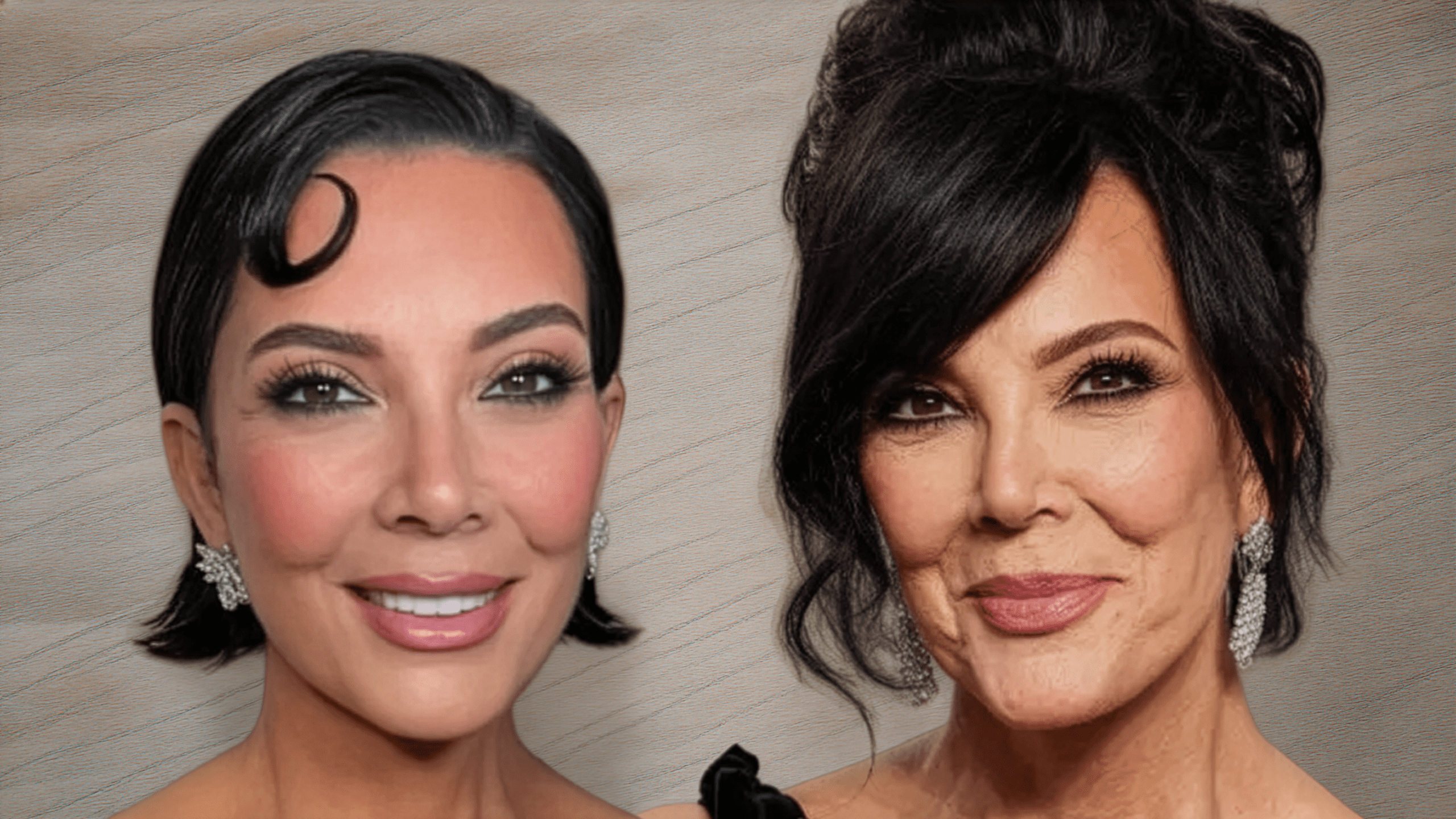
Updated September 17, 2026: it has now been more than a year since the Vogue Arabia reveal, and the twelve-month face I describe below is the one the public is looking at. I have added a short FAQ on the questions patients bring to consult, plus links to what a facelift actually costs in 2026 and to my ponytail deep plane facelift Q&A. In May, NewBeauty asked me at The Aesthetic MEET in Boston whether facelift results can slip. The answer is the same one this post gave in April.
A patient sat down across from me last week, opened her phone, and put two photos of Kris Jenner side by side on my desk. One was from last summer, the other from this month. “What happened,” she asked. Not as gossip. As a question I was supposed to answer for her own face.
It is a very good question. And the honest answer is the most useful thing I can give a patient who is thinking about a facelift.
Kris Jenner is seventy. Last August she revealed the result of her second facelift on the cover of Vogue Arabia. The before and after broke the internet. People called it the best celebrity facelift in a hundred years. Then a year passed. The same internet that crowned the result is now reporting that her facelift is “slipping” and that she is unhappy with how it has held up. Comparisons to other women in the same age cohort, like Denise Richards a decade and a half younger, are not helping.
There is a lesson in this, and it is not a celebrity gossip lesson. It is a plastic surgery lesson, and it is one of the most important conversations a patient and a surgeon can have before scheduling a facelift.
The technique question patients almost never ask, and should
When a patient walks into my office for a facelift consultation, the question I get is almost always “how much does it cost” or “how long is the recovery.” Both fair. Both important. But neither is the most consequential question.
The most consequential question is “what plane do you operate in.”
That is not jargon for the sake of jargon. The plane of a facelift, the layer of facial anatomy where the surgeon does the dissection and repositioning, is the single biggest determinant of how long the result will last and how natural it will look five and ten years out.
There are essentially two planes a modern facelift can be done in.
The first is the SMAS plane. SMAS stands for Superficial Musculoaponeurotic System, the muscle and tendon layer that sits just beneath the skin. SMAS-based operations work on this layer. The surgeon either folds it (SMAS plication) or removes a strip of it and re-sutures the edges (SMASectomy). It is a respectable, well-established operation, and in the right hands it produces a clean result at three to six months out.
The second is the deep plane. The deep plane facelift dissects beneath the SMAS, releases the four retaining ligaments that anchor the face to the skull (zygomatic, masseteric, mandibular, and platysma), and repositions the entire composite block of tissue, skin and SMAS and fat and muscle, as a single unit. Nothing is stretched. Nothing is under tension. The longevity numbers from the peer-reviewed literature now run ten, twelve, even fifteen years.
Kris Jenner had a SMAS-based operation. Specifically a lateral SMASectomy paired with a deep neck lift. That is not the deep plane facelift, and it is not the endoscopic deep plane operation I trained for at the Ponytail Academy in Pittsburgh and Santa Monica.
The honeymoon phase nobody warns patients about
Every facelift looks remarkable at three months. Every one. I tell every patient this in consultation, and most of them do not believe me until they see it themselves.
Here is why. At three months postoperatively, swelling has not fully resolved. There is still a layer of inflammatory fluid plumping the face. Skin is still tight from the closure. The deep tissues are healing in a position that is, frankly, slightly tighter than where they will eventually settle. Add good lighting and a glam team, as celebrity reveals do, and you have what I call the honeymoon face.
The honeymoon face is not the result. It is a preview of the result, dressed up.
The real result, the one a patient lives with, lives at twelve to eighteen months out. The swelling has resolved. The skin has relaxed. The deep tissues have settled into their new home. That is the face the patient will see in the mirror for the next decade.
If the operation was right for the anatomy, the twelve-month face is barely distinguishable from the three-month face. Rested. Younger. Still recognizably the patient.
If the operation was not right for the anatomy, twelve months is when the gap shows up. Volume that was masking a structural issue retreats. Skin that was tight relaxes. The midface, which is heavier than people realize, starts to descend again.
The midface, the malar bags, and why they returned
Look at the recent photos with an honest eye. The lower face and neck are still meaningfully better than they were before surgery. The jawline is cleaner. The platysmal bands are quiet. That part of the operation worked.
The midface is a different story.
The cheeks, briefly lifted into position by swelling and a tight skin closure, have descended again. The malar bags, the prominent rounded fullness that sits on top of the cheekbones, are now obvious. Two of them. Round, bright, and impossible to unsee.
This is not a surgical failure in some mysterious sense. It is the predictable, anatomically explainable behavior of a midface that was not fully addressed by the operation. A lateral SMAS technique pulls on the side of the face. It does not reposition the malar fat pad, the cushion of fat that gives a cheek its shape and prevents the cheekbone area from collapsing into a pouch.
The deep plane operation handles this directly. We release the zygomatic ligament, free the malar fat pad, and reposition the whole construct as one composite piece with the rest of the flap. The endoscopic ponytail lift accomplishes the same thing through hidden hairline incisions.
When you skip the malar release on a face that needed it, the honeymoon phase covers the gap. The post-honeymoon phase shows the gap. That is what we are watching unfold in public.
A seventy-year-old face is not a fifty-year-old face
There is a layer to this story that does not get said out loud often enough, because it sounds impolite. A seventy-year-old face does not behave the same as a fifty-year-old face. The elastin content has dropped. The collagen network is thinner. The deep ligamentous support that anchors a face to its skull is no longer doing the job it used to. Run the same operation on a fifty-year-old and a seventy-year-old by the same surgeon on the same day, and the fifty-year-old will hold the result longer.
Every plastic surgeon knows this. Few of us volunteer it.
So I will. At seventy, the choice of operation matters more than it does at fifty. A SMAS-based operation on a seventy-year-old face buys you maybe a year or two of looking the way you did the day after the bandages came off, then a steady drift back toward where you started. A deep plane facelift on the same anatomy gives you ten to fifteen years of holding. That is not opinion. That is what the longitudinal peer-reviewed data shows.
This is the math behind the Denise Richards comparison the press has run with. Richards is fifty-five, fifteen years younger than Kris, and her surgeon took her into the deep plane. Younger tissue plus a deeper, more durable operation equals a result that, a year out, still looks like the result.
What this means for your facelift decision
For the patient who is reading this and thinking about her own face, here is what I want you to take away.
If you are choosing between facelift surgeons, ask each one what plane they operate in. Ask what it costs, too, and expect a straight answer; mine is published. Ask them how often they perform a deep plane facelift versus a SMAS-based operation. Ask them what their longevity data looks like at ten years out, not just at six months. The answers will tell you a lot.
If you are in your forties or fifties, you have flexibility. Your skin and ligaments still have enough integrity that several techniques can give you a strong result. The deep plane will still last longer, but the gap between options is narrower.
If you are in your sixties or seventies, that flexibility is gone. The technique you choose is doing most of the work. A deep plane facelift is the operation I would recommend to my own family member at that age, every time.
Most importantly, look at twelve-month results, not three-month reveals. A surgeon who only shows you fresh post-op photos is showing you the honeymoon. A surgeon who can hand you a stack of one-year, two-year, and five-year follow-up images is showing you the actual deliverable. That is the surgeon you want.
One more thing about fillers
Patients who have spent a decade chasing volume loss with filler often arrive in my office with a face that looks fuller, not younger. Puffy cheeks. No jawline. Odd upper lip volume. The filler did its job for a while, but it was paying a tax that the face never stopped charging.
A facelift is different. It is a one-time correction of structural anatomy. If you choose the right operation for your face, you do not pay that filler tax for the next decade. You pay once, and the face appreciates.
If filler is right for your situation today, I will use it. If surgery is the answer, I will recommend it honestly. The goal is the same. The face you recognize in the mirror.
Kris Jenner facelift FAQ: what patients ask me in consult
What facelift did Kris Jenner get?
A lateral SMASectomy with a deep neck lift, by her own surgeon’s account. That is a SMAS-based operation on the side of the face plus direct work on the neck. It is not a deep plane facelift and it is not the endoscopic ponytail lift. The distinction matters more than the surgeon’s name, and it is the first thing I explain when a patient brings her photos in.
Why does Kris Jenner’s new face look different a year later?
Because the three-month reveal was the honeymoon face and the current photos are the real result. Search “Kris Jenner new face” (or Chris Jenner, the spelling half the searches use) and you get the Vogue Arabia images. Those were taken with swelling still in the cheeks and the skin still tight from closure. A year on, the swelling is gone, the skin has relaxed, and the midface that the operation did not reposition has settled back where it was. The lower face and neck still look good. The malar bags are back. Nothing mysterious happened; the anatomy did what that operation left it free to do.
Is Kris Jenner’s facelift slipping, and does that mean it failed?
“Slipping” is the internet’s word. Mine is settling. The neck and jawline improvement has held. What returned is the midface descent and the malar bags, because a lateral SMAS technique does not release the zygomatic ligament or reposition the malar fat pad. So the operation did what it was designed to do. It was not designed to do enough for a seventy-year-old midface. That is a planning gap, not a surgical error, and it is exactly the gap I try to close in consult before anyone is on the table.
How long does a facelift last at seventy?
It depends far more on the plane than on the surgeon’s reputation. A SMAS-based lift on seventy-year-old tissue tends to hold its best look for a year or two and then drift. A deep plane facelift on the same face, with the ligaments released and the composite flap repositioned without tension, holds for ten to fifteen years in the longitudinal data. At seventy, elastin and collagen are thinner and the ligaments are doing less of the work, so the operation has to do more of it. That is why I recommend the deep plane to my own family at that age.
Should I wait for my own twelve-month result before judging a facelift?
Yes, and judge your surgeon’s work the same way. Ask for one-year, two-year and five-year photos, not fresh post-op reveals. If the twelve-month face looks like the three-month face, the operation matched the anatomy. If it does not, you are looking at the honeymoon.
Why choose Dr. Agullo for a facelift in El Paso
Double board-certified by the American Board of Plastic Surgery and the American Board of Surgery. Fellow of the American College of Surgeons. Mayo Clinic plastic surgery fellowship. Clinical Associate Professor of Plastic Surgery at Texas Tech University Health Sciences Center, where I teach the same techniques I use every day. Affiliate Professor at UTEP. Castle Connolly Top Doctor for thirteen consecutive years. Ponytail Academy intermediate course in Pittsburgh and advanced course in Santa Monica. Approximately sixty percent of my facelift patients fly in from out of town, because the operation, not the city, is what they are choosing.
Ready to talk?
If you are thinking about a facelift, the most useful forty-five minutes of your year is a consultation with the surgeon who will actually perform the operation. Bring photos of yourself from ten years ago. Bring the photos that bother you now. Bring the questions you would not ask your dermatologist. I will evaluate your anatomy, walk you through the options honestly, and tell you whether you need a deep plane facelift, an endoscopic ponytail lift, a neck lift only, or to come back in a few years. If filler is the right answer for you today, I will tell you. If you need surgery, I will not pretend you do not.
For a more editorial read on the same case, see my piece on drworldwide.com: After the Honeymoon: Kris Jenner, the SMAS Plication, and the Difference a Decade Makes.
Call (915) 590-7900, text 1-866-814-0038, or book online at agulloplasticsurgery.com/appointments. Follow along at @RealDrWorldWide on Instagram, TikTok, and Snapchat, @Agullo on X, or @AgulloPlasticSurgery on Facebook. #StayBeautiful