November 17, 2026 | Body Contouring, Weight Loss
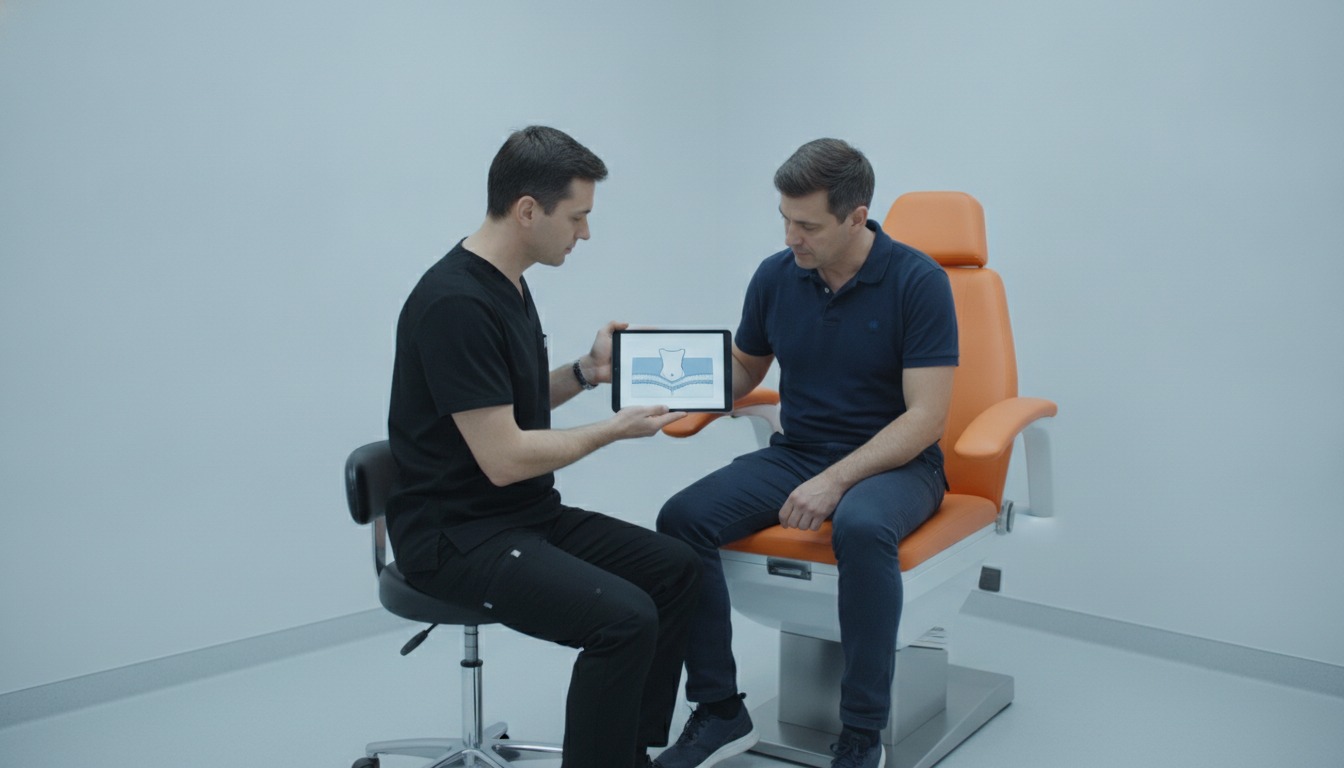
Every few weeks a patient sits in my exam chair, lifts a shirt, and asks for liposuction on a belly that is round, tight and firm. I reach out and try to pinch it. There is nothing to pinch. I cannot help that patient with a cannula, and I tell them so.
In September a study from the State University of Campinas, published in Life Sciences and reported by Newsweek under the headline “Strength Training Shrinks Fat Cells in Just 7 Days, Study Finds,” gave me a better way to explain why. Newsweek’s reporter asked for my read. The story ran without it, so the lines below are the answers I sent her.
The Fat I Can Remove and the Fat I Cannot
“Why is this study important? Well, there are two types of belly fat, subcutaneous fat and visceral fat. The subcutaneous fat is the one that sits above the muscle, below the skin. This is the fat we can remove with liposuction or a tummy tuck. The visceral fat sits around the intestines, and there is no way to surgically remove it. This visceral fat is the one that can cause insulin resistance, fatty liver, and increased cardiovascular risk.”
The Pinch Test
“A lot of patients have difficulty distinguishing one from the other. For example, a tight abdomen where you cannot pinch fat is usually mostly visceral fat. I still get a lot of patients who come in for liposuction when there really isn’t any superficial fat to liposuction. It’s all visceral fat. This can only be reduced with diet, exercise, and the help of GLP-1s.”
| What I find in the room | What I recommend |
|---|---|
| Soft, pinchable fat over a flat muscle wall | Liposuction, or a tummy tuck if the skin is loose |
| Tight, round abdomen, nothing to pinch | Diet, strength training, a GLP-1 if indicated; no surgery yet |
| Both: a pinchable layer over a round belly | Lose the visceral fat first, then contour the layer that remains |
| Loose skin after major weight loss | Tummy tuck, with or without liposuction |
The numbers for the first and last rows are in the lipo and tummy tuck cost post and on the fees page. Where BMI fits into candidacy is in the eligibility post.
What the Study Found
“In summary, what the study showed was that the mechanism to burn visceral fat in obese mice is turned on as soon as one week into strength training. What they did is they used obese mice and made them do seven sessions of a loaded stair climb, in other words, about a week of strength training. The weight on the scale did not change, but the fat around their intestines had lost mass and the cells were smaller. This fat around the intestines represents the human visceral fat that we know is unhealthy. The main focus here is that there were positive changes before we could see anything on a scale.”
“So this study suggests that resistance training can act on this exact type of fat early on, and that in the beginning we may not see a change in weight, but there will be a decrease in the size of visceral fat.”
The Caveats
“When we look at a study, we always have to discuss limitations. This is an animal study. In humans, we usually see measurable changes in the visceral fat compartment around 8 to 16 weeks. Also, these mice continued to be fed a fatty diet, so we may see even better results with resistance training and diet rather than resistance training alone.”
The Plan I Write for the Patient I Cannot Operate On
“I tell my GLP-1 patients not to focus too much on the scale in the first month. I do recommend strength training exercises, which will build muscle and often hide the fat that is lost on the scale, because muscle weighs more. This study gives me reassurance that strength training may be reshaping the visceral fat compartment early on, before seeing anything on the scale.”
Three to four months later, many of those patients come back with a belly I can pinch and a waist that has already changed. That is the consult where liposuction makes sense, and how a GLP-1 patient’s surgery gets planned is in the GLP-1 planning post. The full version of this piece, with the subcutaneous versus visceral table and the GLP-1 program side, lives on Southwest Plastic Surgery. My shorter read is on Dr. WorldWide.
Why Choose Dr. Agullo
I am certified by the American Board of Plastic Surgery and the American Board of Surgery, completed my plastic surgery fellowship at the Mayo Clinic, and serve as Clinical Associate Professor of Plastic Surgery at Texas Tech University Health Sciences Center. Castle Connolly has listed me as a Top Doctor every year from 2014 through 2026. Telling a patient no, and what to do instead, is part of the job I take as seriously as the surgery.
Ready to Talk?
Bring the belly in and let me pinch it. Call (915) 590-7900, text 1-866-814-0038, or book online at agulloplasticsurgery.com/appointments. #StayBeautiful
Find me at @RealDrWorldWide on Instagram, TikTok, and Snapchat, @Agullo on X, or @AgulloPlasticSurgery on Facebook.